
Specs are compiled from manufacturer listings and verified buyer reviews and can change over time — please confirm the key details on the product page before buying.
If you have ever filled a three-tier garden bed with soil only to watch the bottom shelf buckle, you already know the real problem here is not the number of levels but whether the frame can actually hold the weight. You are looking for a raised bed that gives each of your plants the right root depth without collapsing, rotting, or looking like an eyesore halfway through the season.
I’m Rikta — the founder and writer behind Lawn Gear Lab. This guide is built by comparing the manufacturers’ published specifications and the patterns across verified customer reviews, so you get each pick’s real strengths and trade-offs instead of marketing spin.
Here is what you need to know about the best 3 tiered raised garden bed picks that actually deliver on depth, stability, and long-term value.
Our Picks at a Glance
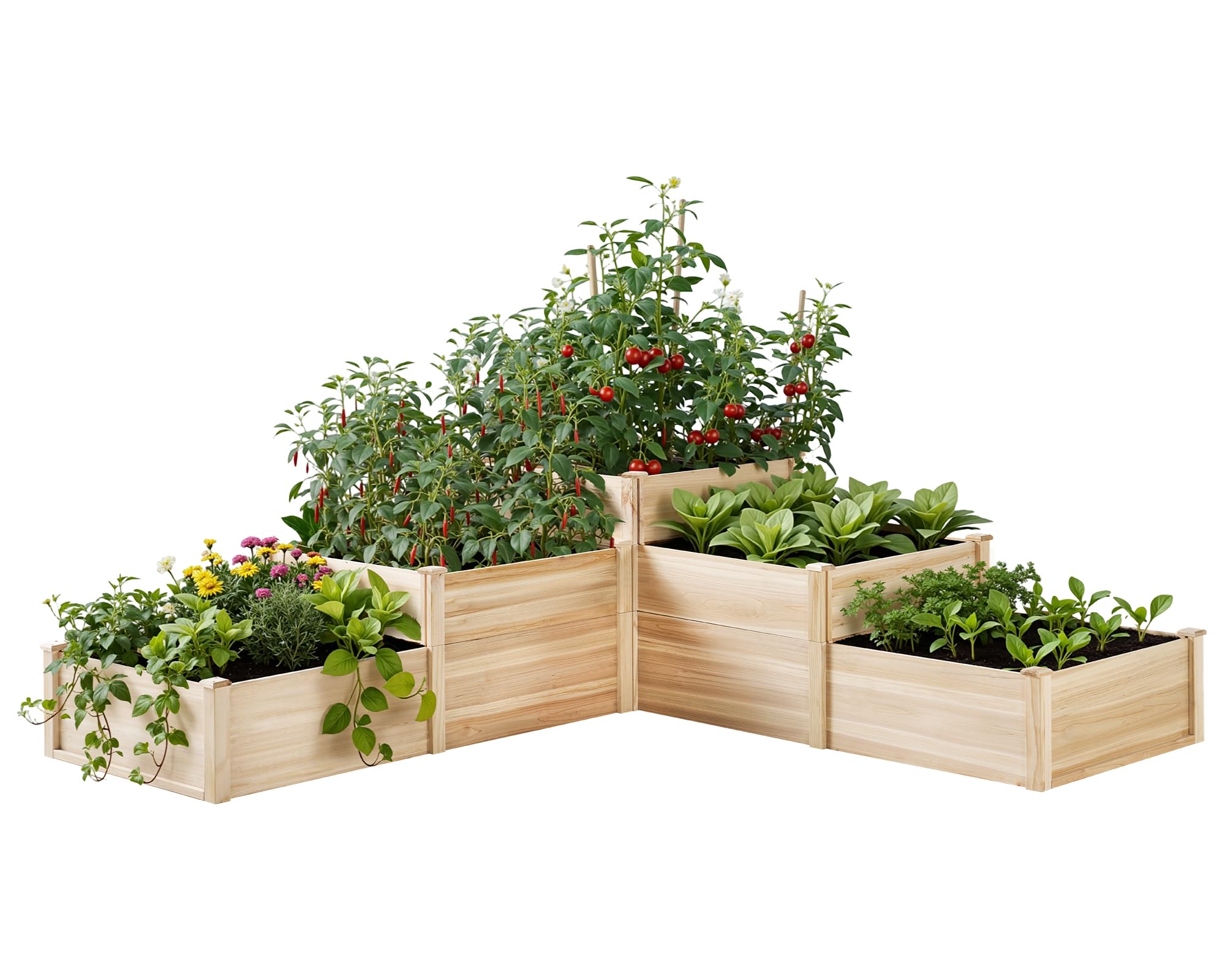

How To Choose The Best 3 Tiered Raised Garden Bed
Three tiers sound great, but not every model gives each level a practical amount of soil. The main things to check are the tier depth, the frame material, and how the bed handles drainage and weather.
Tier Depth and Root Space
The most important spec to look at is the depth of each individual tier. Some beds use a stair-step design with one deep box (like 21 inches) and two shallow ones (under eight inches). Others give you three similarly deep sections. Shallow top tiers limit what you can plant there — they work for lettuce and herbs but not for tomatoes or carrots. Match the depths to what you plan to grow.
Material and Weight Capacity
Fir wood, cedar, and galvanized steel are the three main materials here. Wood looks natural and is easy to paint or stain, but some thin fir boards warp under wet soil. Galvanized steel with a painted coat resists rust and handles heavy loads but can feel flimsy during assembly. Look at the total weight of the product: a heavier frame usually means thicker wood or a stronger structure that will hold soil without bowing.
Drainage and Base Design
An open-bottom design lets plant roots reach the native soil below and drains naturally. A closed-bottom bed with drainage holes prevents overwatering but can trap moisture against the wood over time. Decide which fits your yard — if you are placing the bed on concrete or a deck, an open base is not an option.
Quick Comparison
| Model | Best For | Overall Size (LxWxH) | Material | Weight | Amazon |
|---|---|---|---|---|---|
| AMERLIFE 3-Tier★ Best Overall | Heavy-Duty Gardening | 92.3″ x 28.4″ x 90.2″ | Fir Wood & Cedar | 112.7 lbs | Amazon |
| Giantex CedarPremium Pick | Small Backyard Gardens | 49″ x 49″ x 22″ | Cedar Wood | 31 lbs | Amazon |
| VIVOSUN 3-Tier Wood | Budget-Friendly Start | 48.6″ x 48″ x 21″ | Fir Wood | — | Amazon |
| VIVOSUN 3-Tier Metal | Long-Lasting Outdoor Use | 46″ x 46″ x 24″ | Galvanized Steel | 26.4 lbs | Amazon |
| Yaheetech 3-Tier | Sturdy Wood Frame | 44.5″ x 44.5″ x 20.5″ | Fir Wood | 25 lbs | Amazon |
| HAPPYGRILL 3-Tier | Shallow Roots & Herbs | 35″ x 43″ x 14.5″ | Fir Wood | 18 lbs | Amazon |
| Giantex Open-Base | Optimal Drainage | 47″ x 47″ x 22″ | Fir Wood | 27 lbs | Amazon |
In‑Depth Reviews
1. AMERLIFE 3-Tier Raised Garden Bed
Our pick — over 4★ from 550+ verified ratings; the strongest balance of quality and price.
The heavy-duty titan that stays planted through storms and heavy soil.
At 112.7 pounds and stretching 92.32 inches wide, this is the most substantial bed on the list — literally more than four times heavier than the VIVOSUN metal option. Buyers report it “took less than 30 minutes” to assemble, thanks to the mortise and tenon joints (a no-tool locking system that holds the boards together without screws). The 28-inch depth per tier gives you room for deep-rooted vegetables like tomatoes or carrots, and the built-in dividers keep different plant types separated neatly.
The combination of durable fir panels and solid cedar posts is designed to resist rot and weather, which matters for a structure this size. One owner noted that while the center poles can develop small cracks if you pull the boards in and out too much, it “doesn’t seem to affect how useful it is.”
What makes it worth the price
- Massive 112.7-pound fir-and-cedar frame handles heavy, wet soil without warping.
- Tool-free assembly with mortise and tenon joints saves time — owners mention under 30 minutes.
- 28-inch depth per tier provides real root space for deep vegetables and perennials.
- Dividers and drainage holes keep the bed organized and prevent overwatering.
Two honest trade-offs
- At over 7.5 feet long, it dominates a small patio or balcony — measure your space carefully.
- Center poles can crack if the side boards are moved aggressively, though function holds up.
Grab this if: you have a large garden area and want a single, fortress-like structure that stays put for years.
Look elsewhere if: you need a lightweight unit you can reposition or store, or your space is under seven feet wide.
2. Giantex 3-Tier Raised Garden Bed (Cedar)
Lightweight cedar that brings natural rot resistance to a compact footprint.
Made from 100% solid cedar wood, this Giantex model weighs 31 pounds and measures a square 49 inches per side — a much smaller footprint than the AMERLIFE above, making it a strong pick for tight backyards or deck corners. The manufacturer claims the cedar offers natural durability, and owners say it “liked it enough to buy 3 more,” pointing to confidence in the build.
The instruction manual and numbered hardware make assembly straightforward, though one reviewer who built it manually (without a power screwdriver) recommended using one to speed things up. The 22-inch overall height gives each tier a decent soil capacity, but note that the cedar is unfinished, so several buyers added a sealant or paint to protect against New England winters.
What stands out
- Cedar construction resists moisture and insects naturally without chemical treatment.
- At 31 lbs and 49″ square, it fits a small yard or balcony without overwhelming the space.
- Reviewers bought multiple units, indicating the value and reliability hold up.
- Beginner-friendly assembly with numbered parts and clear steps.
Two honest trade-offs
- Unfinished wood needs sealing or painting to survive wet climates and freeze-thaw cycles.
- One panel cracking during assembly was reported — check the fit before tightening fully.
Reach for this if: you prefer cedar over fir for its natural rot resistance and need a manageable size for a small garden.
Pass if: you want a bed ready to fill immediately with no additional sealing or finishing work.
3. Yaheetech 3 Tier Wooden Raised Garden Bed

Single-piece side panels that keep soil locked in and splinters out.
Unlike many wooden beds that piece together several small slats on each side, the Yaheetech uses a full single-piece side plate per face. This design stops soil from leaking through gaps and makes the structure notably stable — buyers describe it as “very impressive for the price.” The 44.5-inch square footprint and 20.5-inch height sit right in the middle of this list, and the 11.99 cubic feet of capacity give you enough volume for a solid strawberry patch or mixed herb garden.
The fir wood is well sanded from the factory, so you are less likely to deal with splinters during assembly. One reviewer noted it took about an hour with two people and that the included screws allow you to reconfigure the three tiers into separate single beds if you prefer a flat layout later.
Why it earns the spot
- Single-piece side panels eliminate soil spillage and add structural rigidity.
- Sanded wood surface reduces splinter risk during setup and regular use.
- Screws connect the tiers, but you can disassemble into three separate beds if needed.
- Customers note clear, step-by-step instructions with numbered wood and lettered screw bags.
Two honest trade-offs
- The unfinished fir will need staining or painting to prevent early rot in damp climates.
- At 25 pounds, it is light enough to shift if not placed on level ground before filling.
Ideal for: gardeners who want a clean, leak-proof wooden bed that can be broken into separate planters down the road.
Not ideal if: you want a bed that is already sealed and ready to survive rain without extra coating.
4. VIVOSUN 3-Tier Metal Raised Garden Bed

Galvanized steel that outlasts wood through two summers and counting.
Switching to metal solves the wood-rot problem entirely. This VIVOSUN bed is made from galvanized steel (steel coated with a protective layer of zinc) and finished with multi-layer paint to resist rust and fading. One buyer reports “it’s been two summers and they are still as sturdy as when put together” — a strong endorsement for longevity. At 26.4 pounds it is also notably lighter than any wooden bed of comparable size, so you can move it around before filling.
The stair-step design measures 46 inches square and 24 inches tall, giving each of the three levels a distinct depth for plants with different root lengths. The package includes a screwdriver, scissors, and gloves, which is a nice touch. Some owners note the metal sheets feel thin during assembly, but once the soil is added, the weight helps reinforce the structure.
What works well
- Galvanized steel with painted finish resists rust through multiple rainy seasons — proven by two-summer reviews.
- At 26.4 lbs versus the AMERLIFE wood bed at 112.7 lbs, making relocation before filling easy.
- Included assembly tools (screwdriver, scissors, gloves) reduce the need for separate purchases.
- Three-tier depth range (up to 24 inches) accommodates both shallow herbs and deep-rooted vegetables.
Two honest trade-offs
- Assembly can be tricky — some reviewers found the thin panels frustrating even with two people.
- The metal heats up in direct sun, which may stress heat-sensitive plants during hot afternoons.
Go with this if: you want a rust-resistant, long-lasting bed that stays put through harsh weather without wood maintenance.
skip it if: you plan to assemble solo or you garden in a very hot climate where metal can overheat the soil.
5. Giantex 3-Tier Raised Garden Bed (Open-Base)
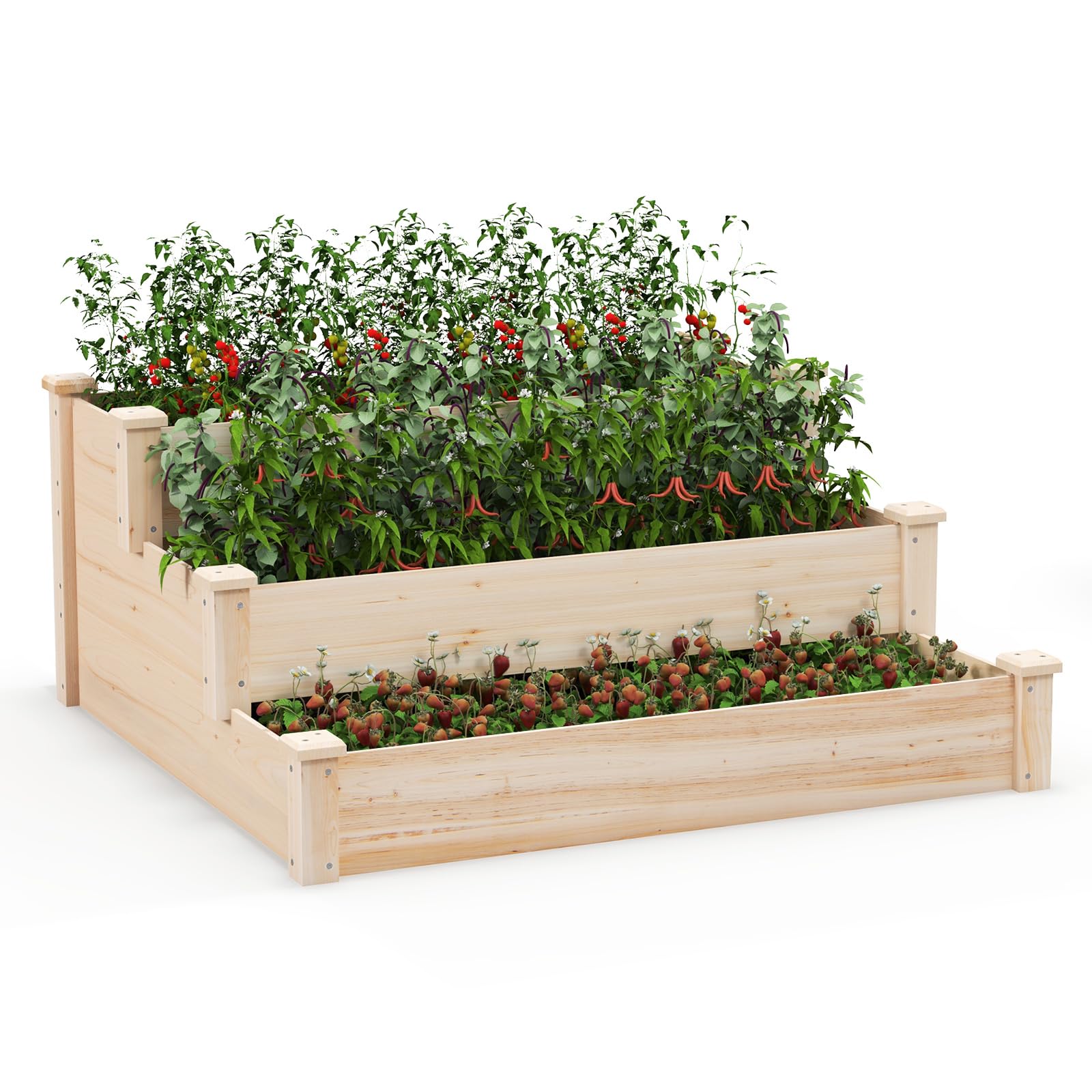
An open-bottom design that gives roots direct earth access.
This Giantex model features an open-ended base, meaning the bottom of the bed is completely open to the ground beneath. This allows water to drain naturally and plant roots to reach into the native soil, which is a major advantage for perennials and deep-rooted vegetables. The frame is made from fir wood with reinforced corners and screw connections, and at 27 pounds you can lift and position it on top of prepared ground.
Buyers found the assembly quick — several mentioned “about ten minutes” using the slotted legs and included manual. The natural wood surface can be painted or stained any color you like. One careful note: because the base is open, this bed works best directly on soil, not on concrete or solid decking.
Why it stands out
- Open-ended base promotes natural drainage and allows deep root penetration into ground soil.
- Light 27-pound fir frame is easy to position before adding soil.
- Assembly takes roughly ten minutes thanks to slotted legs and numbered manual.
- Paint-ready surface lets you customize the color to match your garden aesthetic.
Two honest trade-offs
- Not suitable for patios, decks, or balconies — the open base requires direct soil contact.
- Wood is relatively thin, so sealing it before filling will extend its life significantly.
Best for: anyone placing the bed directly on a garden plot who wants unrestricted drainage and root growth.
Not for: raised bed gardeners on hard surfaces like concrete, pavers, or wooden decks.
6. HAPPYGRILL 3-Tier Raised Garden Bed
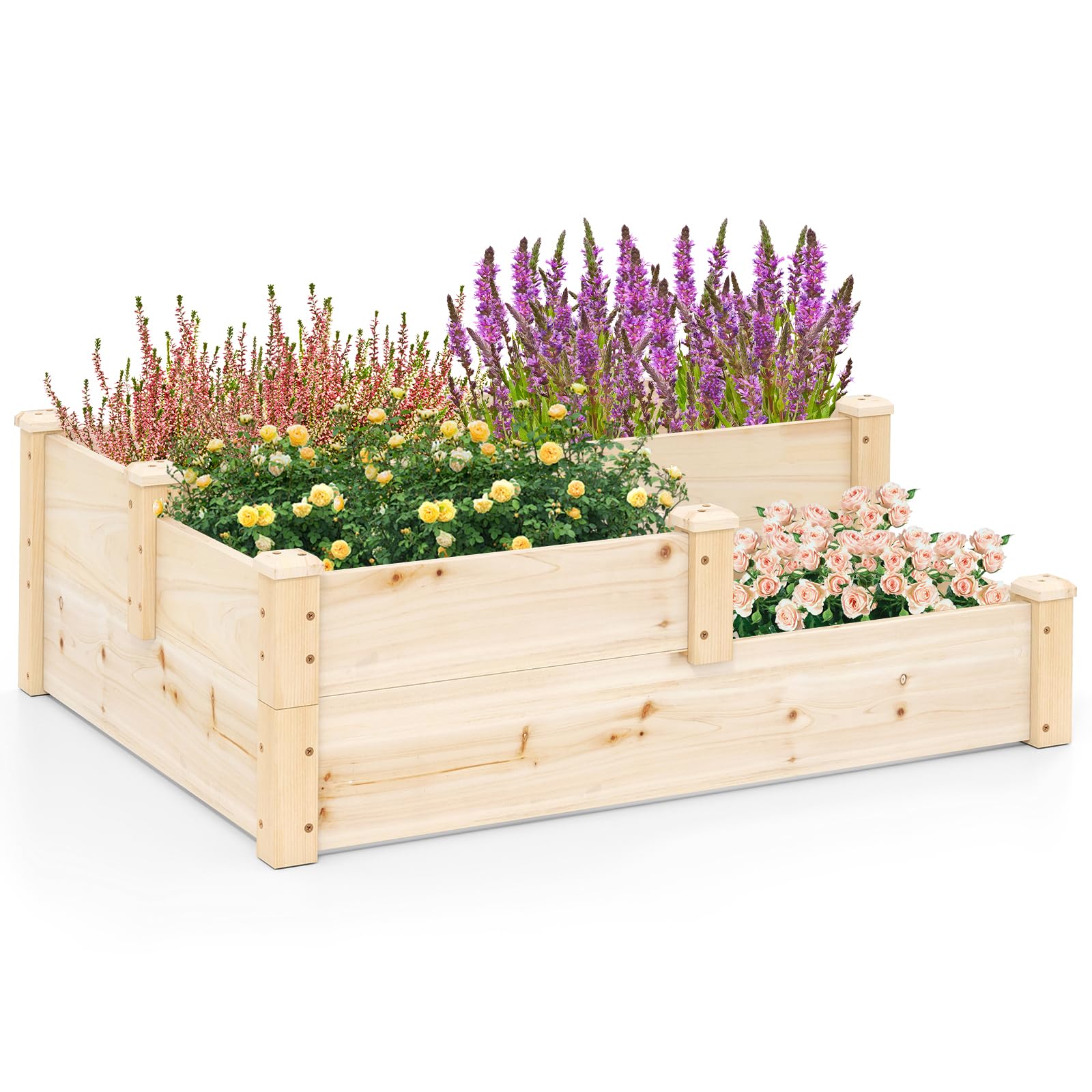
A trim, lightweight bed that fits narrow patios and focuses on shallow roots.
The HAPPYGRILL is the smallest and lightest wood option here at 18 pounds with a footprint of about 35 by 43 inches. Its three tiers offer depths of 6.5, 12, and 13.5 inches — ideal for shallow-rooted herbs, lettuce, and flowers rather than deep-rooting tomatoes. The open-ended base lets excess water drain directly into the earth, and the slotted connections make assembly straightforward.
Reviewers liked the “perfect for my backyard” feel and the easy setup, noting that the wood looks attractive and fits well in tight outdoor spaces. However, one owner reported the bottom front detached after just two weeks, and another said the wood began bowing after three weeks. This seems to be an inconsistent quality issue — you may get a sturdy unit or one that struggles with the weight of wet soil.
What you get
- Lightweight 18-pound fir frame is the easiest to move and position solo.
- Three tier depths (6.5, 12, and 13.5 inches) suit shallow-root plants like herbs and greens.
- Open-ended base provides direct ground drainage for natural soil health.
- Sanded wood surface prevents splinters during handling.
Two honest trade-offs
- Multiple reviewers point out bowing and joint failure within weeks of filling with soil.
- The wood is soft and drinks up stain very quickly — sealing it takes extra effort.
Consider this: if you need a very lightweight, small bed for a patio corner and only plan to plant shallow-root crops.
Avoid if: you want a long-term bed that can hold heavy, wet soil without structural issues mid-season.
7. VIVOSUN 3-Tier Wooden Raised Garden Bed

An affordable stair-step that gets you started fast but may bend under heavy loads.
VIVOSUN’s wooden three-tier bed uses a stair-step frame with dimensions of 48.6 by 48 inches and an overall height of 21 inches. The three depths — 21, 14, and 7.8 inches — give you one deep tier for root vegetables and two shallower ones for typical garden plants. Assembly is genuinely fast: shoppers say they finished in about five minutes by sliding panels into the reinforced corner slots with no tools required.
That speed comes with a durability cost. One buyer mentioned that after filling the bed with soil and planting tomatoes, the frame “broke — barely standing right!” VIVOSUN support sent a replacement quickly, but the pattern raises a concern if you plan to load the bed with heavy, wet soil. For lighter plantings and a budget entry point, the five-minute assembly and attractive look still work well.
The bright side
- Assembly takes about five minutes with no tools — just slide panels into slotted corners.
- Three distinctly different depths (21, 14, and 7.8 inches) suit varying root lengths.
- You can reconfigure the sections into three separate flat beds if preferred.
- Fir wood construction with reinforced corner brackets holds up in mild conditions.
The catch
- Several buyers report the structure buckles under the weight of wet soil and mature tomato plants.
- Included screws may be too weak — some owners bought separate hardware for extra strength.
Choose this: if you want an ultra-fast, inexpensive setup for light plantings like flowers and herbs in a small backyard.
Skip it: if you plan to fill the bed with heavy soil and expect it to hold up through a full season without reinforcement.
Understanding the Specs
Footprint and Square Space
A 3-tier bed takes up a chunk of your yard. The footprint (length x width) determines whether the bed fits your patio, lawn corner, or balcony. Wider beds like the AMERLIFE at 92.32 inches give you more linear growing space but dominate a small area. Compact 44-49 inch square beds from Yaheetech and Giantex fit tighter spots without sacrificing three-tier function.
Tier Depth vs. Root Depth
The depth of each tier is the spec that decides what you can actually grow. A shallow 6.5-inch tier works for lettuce, spinach, and herbs. A 13.5 to 21-inch tier handles tomatoes, peppers, and carrots. Stair-step designs give you a mix, but if all three tiers are shallow, you lose the vertical advantage. Always compare the tier depths, not just the overall height of the bed.
Material: Wood vs. Metal
Fir wood is the most common and affordable but needs sealing to prevent rot. Cedar offers natural moisture and insect resistance without chemical treatment but costs a little more. Galvanized steel with a painted coating resists rust and handles heavy wet soil well, but it can heat up in direct sun and feels thin during assembly. Match the material to your climate and how much maintenance you want.
Open-Bottom vs. Closed-Bottom
An open-bottom bed (like the Giantex Open-Base) sits directly on the ground so plant roots can grow into the native soil below and water drains naturally. This is ideal if you place the bed on a garden plot. A closed-bottom bed with drainage holes is necessary if you put the bed on concrete, a deck, or a patio — but you need to ensure the holes are large enough to prevent waterlogging.
FAQ
How much soil do I need to fill a 3 tiered raised garden bed?
Can I place a 3 tiered raised garden bed on concrete or a deck?
Will a wooden 3 tier garden bed rot in the rain?
How much weight can a 3 tier metal raised garden bed hold?
What can I grow in a shallow top tier of a 3 tier bed?
Can I separate the tiers into individual raised beds?
How long does it take to assemble a 3 tier raised garden bed?
Does a 3 tier planter box come with a warranty?
Final Thoughts: The Verdict
For most people, the best 3 tiered raised garden bed winner is the AMERLIFE 3-Tier because its 112.7-pound fir-and-cedar frame provides the deepest 28-inch tiers and tool-free assembly in a massive, storm-proof structure that buyers praise as “absolutely solidly made.” If you want a rust-resistant metal bed that lasts through multiple seasons, grab the VIVOSUN Metal — it has weathered two summers and counting without issues. And for a compact, beginner-friendly cedar bed that fits a small yard perfectly, the Giantex Cedar delivers natural durability at a manageable 31 pounds.
How We Picked
We do not accept paid placement. Every pick is matched to a real buyer and a real use-case; we do not hands-on test units.
Sources & Methodology
Specifications: manufacturer listings and product documentation. Review insights: verified customer reviews, as of July 2026. Pricing: not shown on this page (it changes often); check the current price via the retailer link.
As an Amazon Associate, Lawn Gear Lab earns from qualifying purchases. This does not affect which products we feature.