
Specs are compiled from manufacturer listings and verified buyer reviews and can change over time — please confirm the key details on the product page before buying.
Winter sun, freezing nights, and hungry animals can crack, split, or kill the bark on your young trees in a single season. Wrapping the trunk is the cheapest insurance you have against sunscald (bark cracking caused by winter sun heating and refreezing the trunk), frost cracks (vertical splits from rapid freeze-thaw), and deer rubbing — but picking the wrong material leaves your tree exposed to the worst of the weather.
I’m Rikta — the founder and writer behind Lawn Gear Lab. This guide is built by comparing the manufacturers’ published specifications and the patterns across verified customer reviews, so you get each pick’s real strengths and trade-offs instead of marketing spin.
The best tree wrap for winter must breathe, stay put in wind and rain, and come off easily in the spring without damaging the bark you worked to protect.
Our Picks at a Glance
How To Choose The Best Tree Wrap For Winter
Not every wrap fits every tree or every climate. Matching the material, width, and length to your specific winter problem is the difference between a tree that sails through March and one that develops a vertical bark split you find in April.
Material: Paper, Burlap, or Non-Woven Fabric
Paper wraps (like the HORT option below) have a wax coating that reflects intense winter sun, making them the top choice for preventing southwest-side sunscald on thin-barked trees like maple, cherry, and fruit trees. Burlap (jute) is thicker, more breathable, and excellent for general frost protection and stopping deer from rubbing antlers against the trunk — but it can hold moisture against the bark if wrapped too tightly. Non-woven fabrics (a durable cloth-like material) are lightweight, reusable, and breathe well, but they don’t offer the same rigid sun reflection that paper does. Pick the material that attacks your specific problem.
Width and Length: How Much Wrap Do You Need?
A wrap that is too narrow means more overlapping passes and wasted time. For most young trees up to about 3 or 4 inches in trunk diameter, a 3- to 4-inch wide wrap is standard. For larger trunks or for wrapping the lower 3 to 4 feet of the tree, a 10-inch wide burlap roll covers more vertical distance per spiral, saving you effort. Length determines how many trees you can cover — a 50-foot roll handles several young trees, while a 10-foot roll might wrap one medium trunk. Measure the height you want to cover and multiply by 2 to 3 passes for proper overlap.
Breathability and Moisture Management
A wrap that traps water against the bark creates the perfect environment for rot, fungus, and pests. Look for manufacturers that state their wrap is “breathable” or “porous” — this usually means the material allows air circulation and dries faster after rain or snow. Jute burlap is naturally breathable because of its open weave, while paper wraps rely on a wax coating that blocks water from getting in but also traps moisture if applied over wet bark. Always wrap when the trunk is dry, and remove the wrap in early spring so the bark breathes again during the growing season.
Quick Comparison
| Model | Best For | Material | Length | Width | Amazon |
|---|---|---|---|---|---|
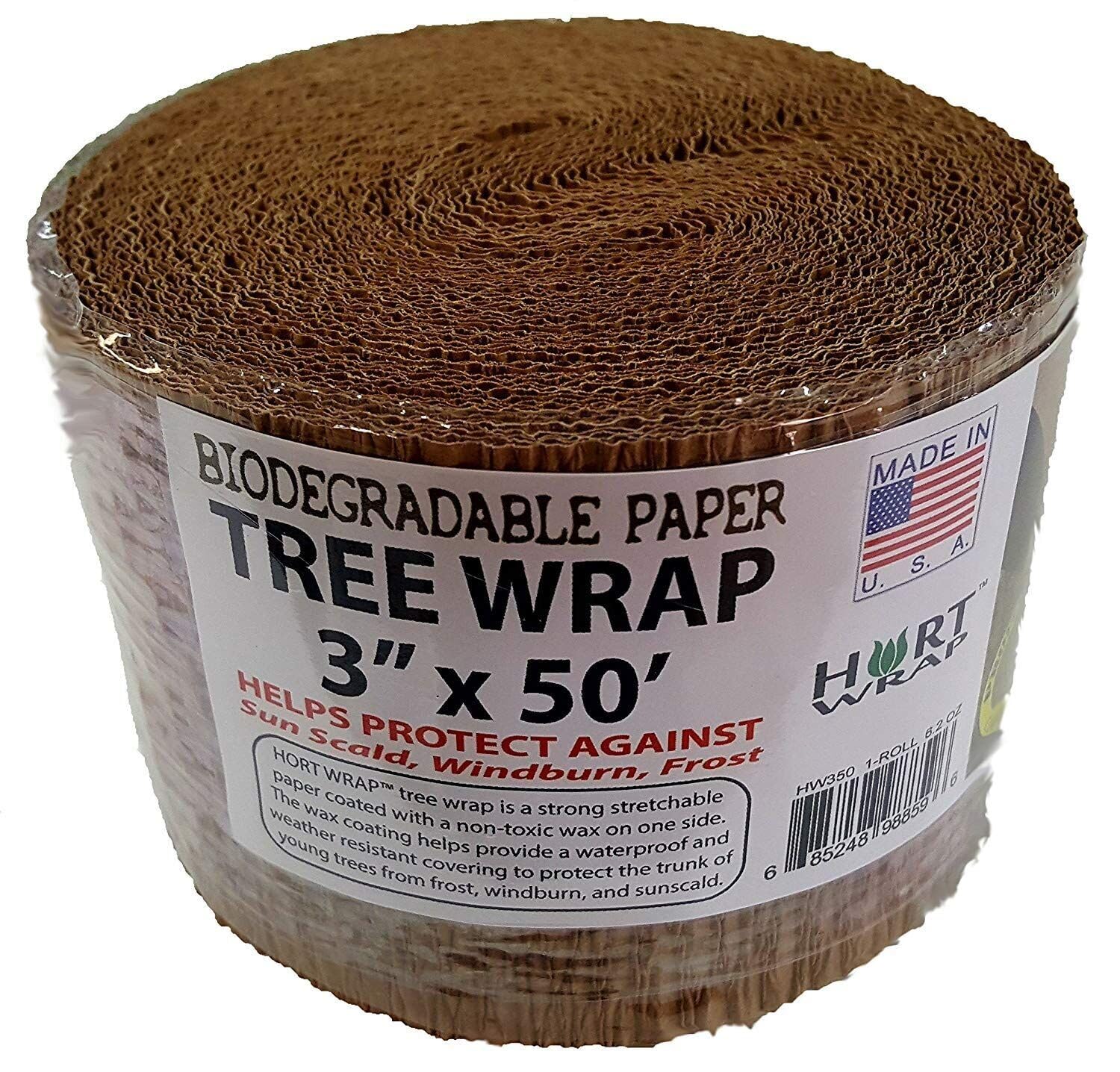
| HORT Paper Tree Wrap★ Best Overall | Sunscald prevention | Wax-coated paper | 50 ft | 3 in | Amazon |
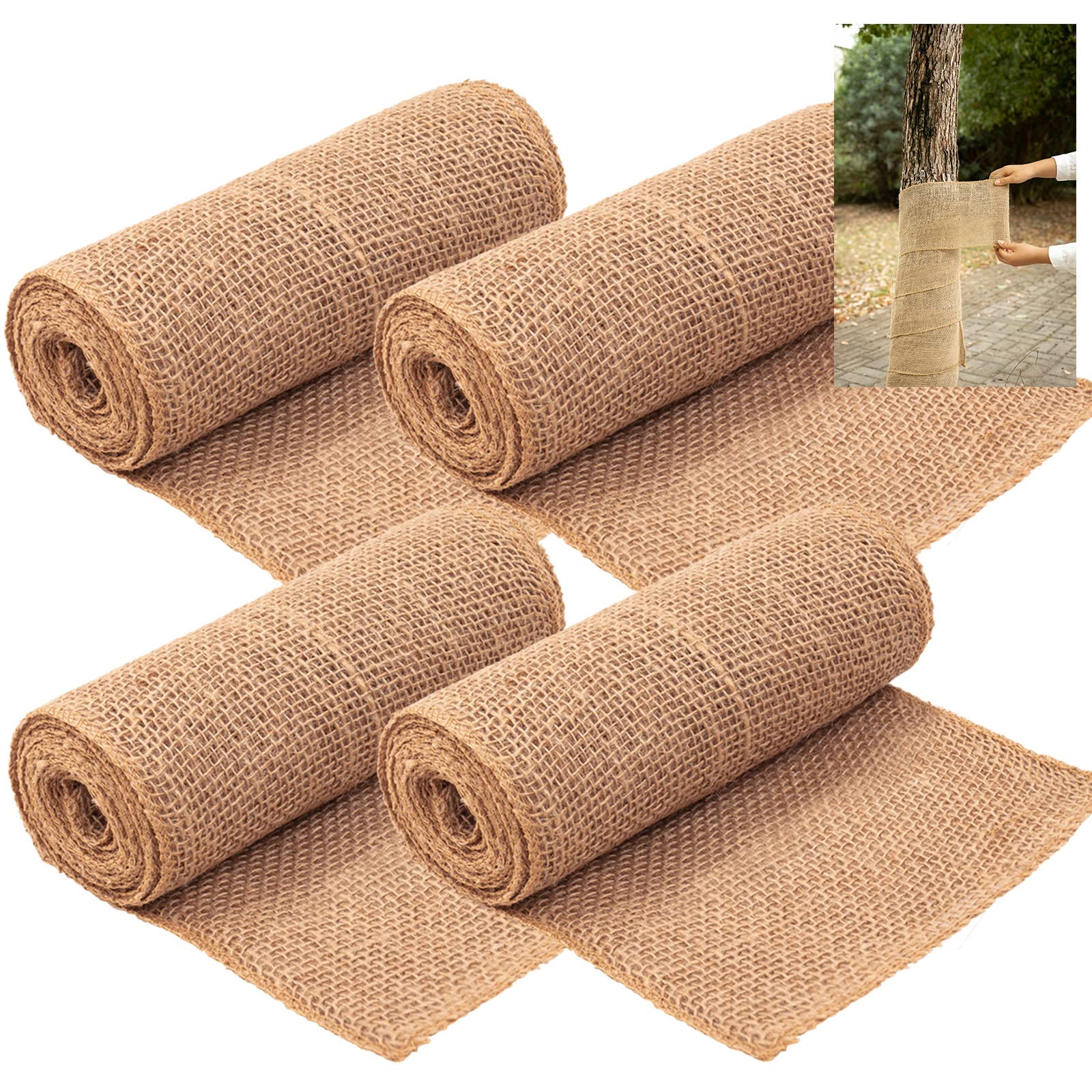
| 4Roll Jute Burlap WrapsTop Value | Multi-tree frost protection | Jute burlap | 40 ft total | 7.8 in | Amazon |
| Tree Wrap for Winter (fowong) | Long continuous wrap | Jute | 32 ft | 10 in | Amazon |
| 2 Rolls Burlap Tree Wrap | Budget multi-pack | Burlap | 10 ft each | 10 in | Amazon |
| Plant Freeze Protection Cover | Full garden coverage | Non-woven fabric | 50 ft | 7 ft | Amazon |
| 4.7″ x 450′ Tree Protector Wraps | Extra-long single roll | Non-woven fabric | 450 ft | 4.7 in | Amazon |
In‑Depth Reviews
1. HORT Paper Tree Wrap
Our pick — 4.5★ from 650+ verified ratings; the strongest balance of quality and price.
Professional-grade waxed paper that fights the winter sun better than burlap ever could.
If sunscald is the main threat to your young maples, cherries, or fruit trees, you want a wrap that reflects intense winter sunlight rather than just insulating against cold. The HORT Paper Tree Wrap uses a commercial-grade paper with a wax coating that creates a water-resistant seal — one reviewer in a desert climate reported effective sun protection for 14+ months, noting the natural look and durability against extreme UV. At just 5.5 ounces for the whole 50-foot roll, it is light enough to carry around the yard without tiring your arms.
The wax side, however, can be tricky to identify — some buyers mention that the waxy side is “indistinguishable” at first, and the roll does not include any tape or tie to secure the end for winter. Unlike the 10-inch-wide burlap options below, this 3-inch wide wrap requires more overlapping passes to cover a tall trunk, but it stretches to conform to the surface, so you can pull it tight against the bark.
Buyers report that it doubles as a deer deterrent for saplings, though the paper can sag and detach over time, needing annual replacement each fall. This is a single-season professional tool, not a multi-year reusable covering.
The sunscald specialist: This wrap is designed for the one specific job of bouncing winter sun away from thin bark, and it does that job better than any burlap roll in this list.
A small caveat: You will need to buy your own twine or tape to anchor it against winter winds — the wrap does not come with a fastener.
Reach for this if: You have thin-barked trees (maple, cherry, fruit trees) in a sunny winter climate where sunscald is the primary concern.
Look elsewhere if: You need one wrap to handle frost, animal rub, and UV all at once — burlap or non-woven fabric may serve you better.
2. 4Roll Jute Burlap Tree Wraps
Four rolls for the price of one — enough burlap to cover a small orchard.
This pack gives you four separate jute burlap rolls, each 7.8 inches wide and about 9.8 feet long, for a total of 40 feet — far more coverage than a single 10-foot burlap roll, and at a very similar price point. One buyer used it on a Florida foxtail palm during a cold spell and reported the wrap provided solid insulation without any stress or browning after the cold passed. Because jute burlap is porous and breathable, it dries faster than paper after rain or snow, reducing the risk of rot that can happen with non-breathable wraps.
Unlike the 10-inch-wide fowong roll below, this wrap is narrower at 7.8 inches, but the trade-off is that you get four separate starting points, so you can wrap multiple trees at the same time without sharing a roll across the yard. A reviewer with an October Glory maple that suffered sunburn during an extreme summer heat spell — bark cracking and peeling — used these wraps and said they secured the bark and protected the trunk beautifully. The natural jute material is lightweight and easy to cut, and it also works as a summer shade cloth for sensitive plants if you want a year-round use.
Multi-tree workhorse: Four rolls means you can wrap several trees in one session without cutting and splicing a single long roll.
A note on use: Two rolls were needed per tree for one buyer’s application, so count on using more than one roll for a large trunk.
Best for: Gardeners with multiple young trees who want a breathable, fast-drying wrap that works for both winter frost and summer shade.
Consider another pick if: You need to wrap one very tall trunk (over 8 feet) without joining rolls.
3. Tree Wrap for Winter (fowong)

A 10-inch-wide jute roll that covers more vertical distance per wrap.
When you are wrapping a medium-to-large trunk, a wider roll saves time and reduces the number of spirals you have to make. This fowong jute wrap spans 10 inches wide and runs 32 feet long — a generous single-roll length that lets you cover several fruit trees or one sizable landscape tree without splicing. Jute is naturally breathable and wrinkle-resistant, so it lays flat against the bark without bunching up and creating air pockets that trap moisture.
The 4Roll set above is 7.8 inches wide, while this fowong roll is 10 inches wide, which translates to noticeably fewer passes when wrapping a tall trunk. The manufacturer notes that jute can have a natural smell when new; airing it out in a ventilated spot for a few days clears the odor. This wrap is also suitable for tree grafting fixed protection and can be cut and sewn for DIY projects like wedding decorations or garden crafts, giving you extra utility beyond just winter protection.
Efficient coverage: The 10-inch width and 32-foot length mean you can wrap a taller tree faster than with narrower or shorter rolls.
Initial scent: Like most jute products, it has a natural smell out of the package — let it air out before wrapping.
Choose this for: Single trees with trunks 6 inches or more in diameter, where a wider wrap cuts wrapping time in half.
skip it if: You only need short wraps for saplings — a multi-pack of shorter rolls will give you more flexibility.
4. 2 Rolls Natural Burlap Tree Wrap
Two rolls of natural burlap for the price of a coffee run — plus 66 feet of rope.
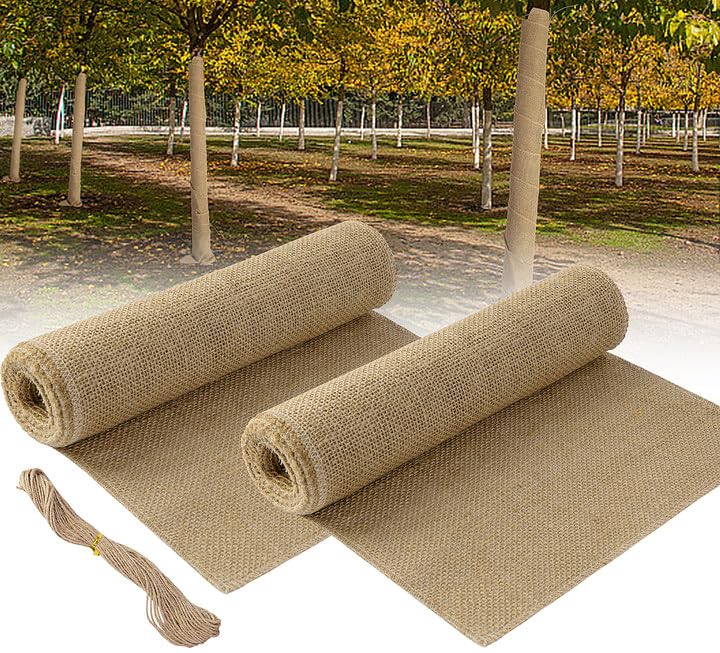
If you need a budget-friendly option for wrapping a couple of small trees or potted plants without spending too much, this DECOHS burlap set delivers. You get two rolls, each 10 inches wide and 10 feet long, plus a bundle of rope totalling 66 feet to secure the wrap. One buyer used it to wrap potted lavender over the winter and said it saved the plants from freezing — the breathable burlap allowed the pots to shed moisture while still insulating against the cold.
The main trade-off is length per roll — at 10 feet each, two rolls cover roughly one medium tree if you are doing a double-wrap, or two smaller trees. The burlap does shed loose fibers that blow around during the first hour after installation, so expect a bit of mess. Unlike the HORT paper wrap that tackles sunscald specifically, this burlap is a generalist — good for frost, wind, snow, and light animal deterrence, but not tune for intense summer-sun reflection.
Simple and cheap: Two rolls plus a generous length of rope for anchoring — easy to use right out of the package.
Short coverage: Each roll is only 10 feet, so you will need both rolls for even a medium-sized tree trunk.
Pick this when: You just need a quick, inexpensive wrap for a couple of young trees or potted plants and you already have some rope.
Avoid if: You are dealing with multiple large trees — you will burn through both rolls and still need more.
5. Plant Freeze Protection Cover (JUNKOGO)
A 7-by-50-foot sheet of fabric that covers trees, shrubs, and entire raised beds.
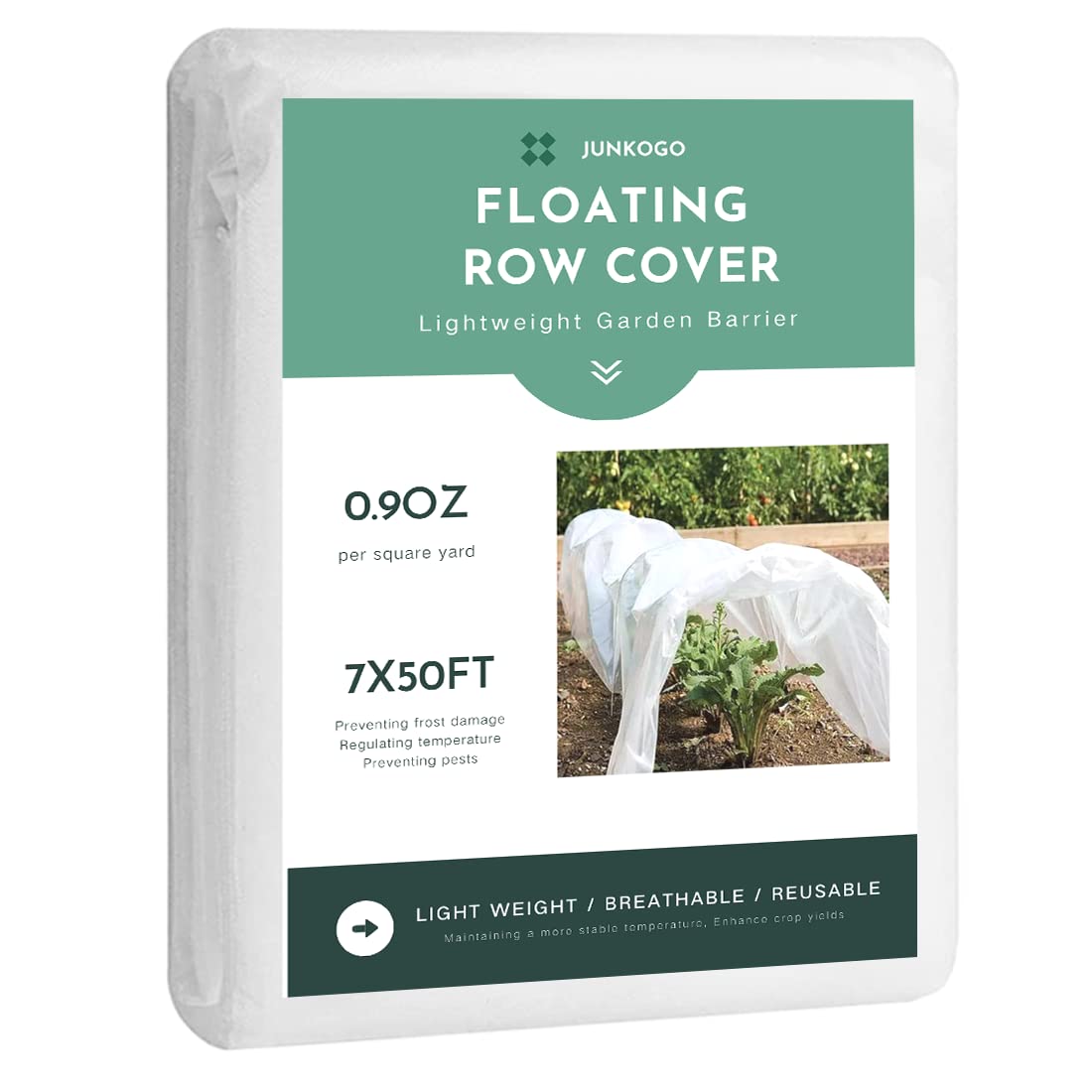
This is not a trunk wrap in the traditional sense — it is a massive 7-foot-wide by 50-foot-long frost blanket made from 0.9 oz/sq (ounces per square yard) non-woven fabric that you drape over entire plants, shrubs, or even a greenhouse frame. The fabric weighs only 1.57 pounds, so you can lift and position it easily over tall trees or wide beds without struggling with heavy material. It allows air, moisture, and sunlight to penetrate, meaning you can leave it on for extended periods without the plant suffocating or overheating on a sunny winter day.
Unlike the jute burlap wraps that tightly encircle a single trunk, this fabric is designed for total coverage — ideal for whole-plant frost protection during sudden temperature drops. It is reusable across seasons, functioning as a shade cloth in summer and an insect barrier in spring. The downside is that it is not a trunk wrap for sunscald prevention; the fabric does not reflect intense sun in the same way as the wax-coated HORT paper. For a homeowner with a mixed garden of trees, shrubs, and vegetables, this one sheet replaces several separate covers.
Versatile garden protection: One sheet covers a large area and works across multiple seasons, not just winter.
Not a trunk wrap: If you specifically need tight bark protection against sunscald, this is too loose for that job.
Buy this for: Full-plant coverage over shrubs, young trees, raised beds, and potted plants during hard frosts and cold snaps.
Look for a trunk wrap instead if: You only need to protect the lower trunk from sunscald or deer rubbing.
6. 4.7” x 450′ Larger Tree Protector Wraps
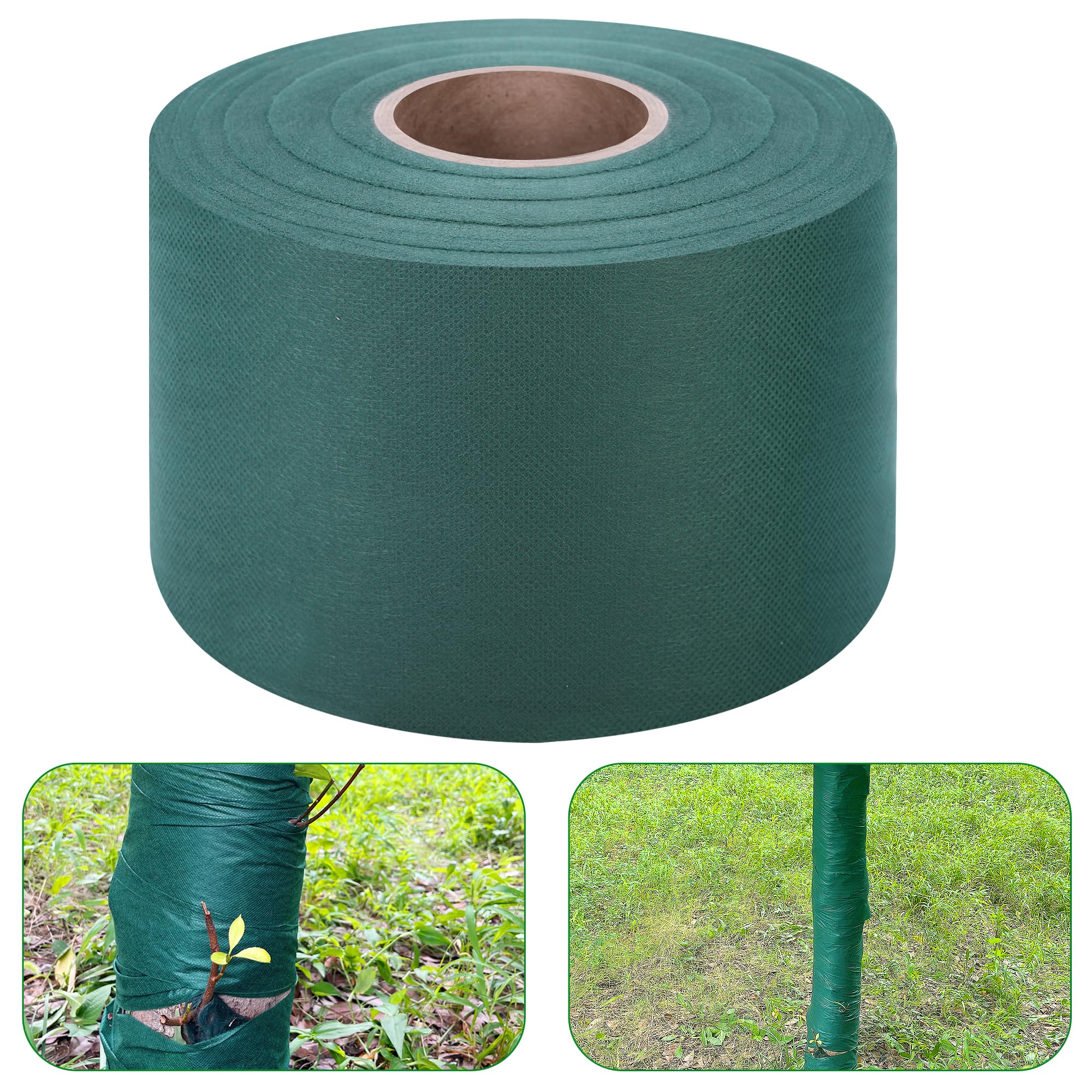
450 feet of green non-woven fabric — enough to wrap a whole row of trees for years.
This roll is an outlier in length: 450 feet of lightweight, breathable non-woven fabric at 4.7 inches wide. The sheer quantity means you can wrap every tree on your property, double-wrap the most vulnerable ones, and still have material left over for future seasons. The fabric is reusable, so after winter you roll it up and store it in the bag for next year. One buyer used it after buck deer scraped the bark off four new 8-inch trees; the wrap stopped any further scraping and the healing went well.
The width is narrower than the 10-inch burlap options, so wrapping a large trunk requires more spiral passes. Owners mention that the material does not tear easily, so you will need scissors to cut it to your desired lengths — you cannot just snap it off by hand. Because it is non-woven fabric rather than jute or paper, it offers good moisture retention and warmth without trapping water against the bark. If you are managing a small orchard or a row of street trees, this single roll could cover everything for several winters.
Best value per foot: At 450 feet, this is the most wrapping material you can buy in one package.
Narrow width: At 4.7 inches, you will make more passes per tree compared to a 10-inch burlap roll.
Go with this if: You have many trees to protect (or one very large one) and you want a reusable, animal-deterrent wrap that can last several winters.
Choose a wider roll instead if: You are only wrapping a few trees and would rather cut down on wrapping time.
Understanding the Specs
Material: Wax Paper vs. Jute vs. Non-Woven Fabric
The material determines what the wrap actually does. Wax-coated paper reflects sunlight to prevent sunscald — the cracking of bark caused by winter sun heating and refreezing the south and west sides of a trunk. Jute burlap is a natural, breathable fiber that insulates against frost and blocks animal teeth and antlers, but it does not reflect UV effectively. Non-woven fabric (like polypropylene, a plastic-based cloth) is lightweight, reusable, and breathable, making it a good middle ground for general frost protection and animal deterrence without the mess of burlap fibers.
Width and Overlap
Width determines how many times you have to spiral the wrap around the trunk to create a full protective layer. A 3-inch wrap (common for paper) requires 3 to 4 overlapping passes for a 4-inch-diameter trunk. For most gardeners, a width of 4 to 10 inches works best — anything narrower than 3 inches is tedious on larger trees, and anything wider than 10 inches can be hard to control on curvy trunks.
Length and Number of Trees
Length per roll is the most practical number for planning how many trees you can cover. A 10-foot roll handles one small sapling with 2 to 3 passes. A 50-foot roll covers 3 to 5 young trees or one large trunk with multiple layers. Multi-roll packs (like the 4Roll set with 40 feet total) allow you to wrap several trees without one person holding the roll while another walks the spiral around the trunk. Extra-long rolls (like 450 feet) are best for orchards, long rows of trees, or gardeners who plan to reuse the material across multiple seasons.
Breathability and Rot Prevention
A wrap that suffocates the bark creates a damp, dark environment where fungi and pests thrive. Breathable wraps (jute burlap, non-woven fabric) allow air to circulate so moisture evaporates after rain or melting snow. Paper wraps with a wax coating are water-resistant from the outside but can trap moisture against the bark if the trunk is damp when you wrap it. Always wrap dry bark and remove the wrap completely in early spring, regardless of material. Buyers who left wraps on through summer have reported peeling bark and insect damage underneath.
FAQ
When should I put tree wrap on for winter?
Can I leave tree wrap on year-round?
Which wrap is best for sunscald prevention?
Does burlap protect trees from deer rubbing?
How many times should I wrap around a tree trunk?
How do I secure the wrap so it does not blow off in winter wind?
Can I use the same wrap for summer sun protection?
How do I know which width to choose?
Is it better to get a long single roll or multiple short rolls?
Does tree wrap work for potted plants or only trees in the ground?
Final Thoughts: The Verdict
For most people, the best tree wrap for winter winner is the HORT Paper Tree Wrap because its wax-coated paper is the only material on this list specifically designed to reflect winter sun and prevent sunscald — the most common cause of bark damage in cold climates. If you want a breathable, multi-roll option for covering several trees in one go, grab the 4Roll Jute Burlap Tree Wraps. And for full-plant frost coverage that protects entire shrubs and raised beds, the standout is the Plant Freeze Protection Cover.
How We Picked
We do not accept paid placement. Every pick is matched to a real buyer and a real use-case; we do not hands-on test units.
Sources & Methodology
Specifications: manufacturer listings and product documentation. Review insights: verified customer reviews, as of July 2026. Pricing: not shown on this page (it changes often); check the current price via the retailer link.
As an Amazon Associate, Lawn Gear Lab earns from qualifying purchases. This does not affect which products we feature.