
Specs are compiled from manufacturer listings and verified buyer reviews and can change over time — please confirm the key details on the product page before buying.
You want compost that feeds your soil, not just fills a hole. The wrong bag can leave your plants hungry, dry out too fast, or introduce weeds. The right one builds darker, richer soil and stronger roots — and you will notice the difference the first time you dig in.
I’m Rikta — the founder and writer behind Lawn Gear Lab. This guide is built by comparing the manufacturers’ published specifications and the patterns across verified customer reviews, so you get each pick’s real strengths and trade-offs instead of marketing spin.
Whether you are filling raised beds, top-dressing a lawn, or amending a flower bed, you need a compost that actually delivers nutrients and improves your soil structure. This is exactly where a clear look at the best compost for yard use separates a thriving garden from one that struggles.
Our Picks at a Glance

How To Choose The Best Compost For Yard
Picking the right compost is about understanding what your soil actually needs. The main things to look at are what the compost is made from, how fine the texture is, and whether it holds onto water so you do not have to water as often.
Look at the Source Ingredients
Compost made from cow manure is a classic choice because it is rich in nitrogen and gentle on roots. Blends that add things like lobster and crab meal or peat provide specific benefits, from boosting microbial life to improving how the soil holds water.
Check the Bag Size and Weight
Bigger bags, like a 40-quart option, are better for covering large garden beds or lawns. Smaller 10-pound bags are easier to carry and perfect for a few containers or small flower beds. You want enough material to do the job without struggling with a bag that is too heavy.
Consider Certification and Odor
An OMRI (Organic Materials Review Institute) listing means the compost meets strict organic standards, which matters if you are growing food. A low-odor or odor-free compost is a quality sign that it has been fully broken down, making it pleasant to use around the house or yard.
Quick Comparison
| Model | Best For | Volume | Weight | Key Ingredient | Amazon |
|---|---|---|---|---|---|
| Espoma Organic Land and Sea★ Best Overall | Rich Transplant Mix | 1 Cubic Foot | 24 Pounds | Lobster & Crab Meal | Amazon |
| Michigan Peat Baccto Wholly CowAlso Great | Large Beds & Mushrooms | 40 Quarts | 34 Pounds | Peat & Composted Manure | Amazon |
| Blue Ribbon Organics OMRI Compost | Premium Container Mix | 7.48 Gallons | — | OMRI Certified Organic | Amazon |
| Brut Cow Compost | Odor-Free Indoor Pots | 10 Quarts | 10 Pounds | Pure Cow Manure | Amazon |
| R&M Organics Premium Compost | Small Gardens & Top-Ups | 0.31 Cubic Feet | 10 Pounds | Dairy Cow Manure | Amazon |
In‑Depth Reviews
1. Espoma Organic Land and Sea Gourmet Compost with Lobster & Crab Meal
Our pick — over 4.5★ from 950+ verified ratings; the strongest balance of quality and price.
Seafood meal gives this compost a unique nutrient edge.
This 24-pound bag brings something unique to the table: a rich blend of lobster and crab meal. These ingredients supply natural nitrogen and trace minerals that support strong growth in vegetables, flowers, trees, and shrubs. It also includes Myco-Tone, a proprietary blend of endo and ecto mycorrhizae (beneficial fungi that attach to plant roots to help them absorb more water and nutrients).
One buyer reports using Espoma Organic Land and Sea compost for three years straight, and they are happy with it. Another noted that since using this stuff, their Hostas grow extremely well. Unlike the pure cow manure options from Brut or R&M Organics, this one is designed as a transplant mix — you use it when planting or transplanting to improve your native soil, not just as a top dressing.
The granule form makes it easy to mix into potting soil or garden beds. There are no synthetic plant foods or chemicals, which aligns with organic gardening principles. If you compare it to the Blue Ribbon Organics compost, the Espoma is more affordable per pound while still delivering a specialized organic boost.
The Bottom Line: A targeted organic amendment with a seafood-based mineral boost and mycorrhizae for healthier root development at transplant time.
Ideal for: Gardeners who want a nutrient-dense transplant mix with the added benefit of beneficial fungi for root health.
Not for: Pure top-dressing jobs or large-scale lawn projects where a simple manure compost would be more economical.
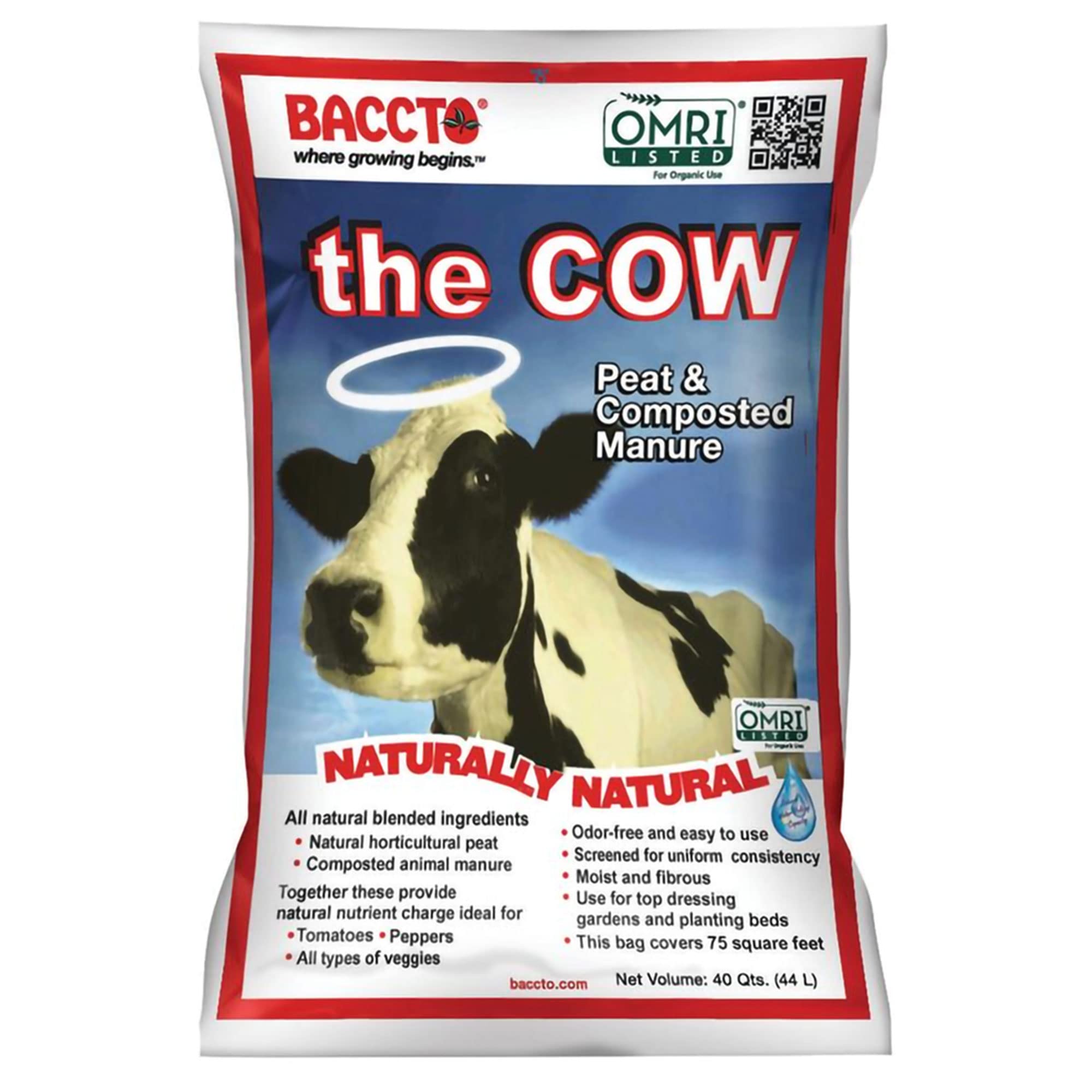
2. Michigan Peat Baccto Wholly Cow Horticultural Compost and Manure
The big bag that covers ground without the stink.
This is the one you reach for when you have serious ground to cover. The 40-quart bag weighs 34 pounds — a full 24 pounds heavier than the 10-pound R&M Organics bag below — giving you four times the volume for big projects. The blend of natural peat and composted animal manure feeds your soil and naturally holds onto moisture, which means you water less often.
Buyers report that the odor-free formula makes it pleasant to work with, whether you are top-dressing a lawn or filling raised beds. One reviewer even noted its high manure concentration works perfectly as a substrate for mushrooms, mixing it 1:1 with coco coir and sterilizing it for 120 minutes at 15psi. The uniform, screened texture spreads evenly and has very little waste — just one to three small sticks per 5-pound bag.
Unlike the Espoma blend which focuses on seafood meal for a targeted nutrient boost, this one gives you a solid all-around organic foundation for vegetables, flowers, and lawns. An 78-year-old buyer mentioned using it with coir and perlite to transform old river bottom sand into productive raised beds.
Why It Excels
- Huge 40-quart bag offers 40 quarts compared to 10-quart options like Brut Cow Compost
- Odor-free formula makes top-dressing lawns and beds pleasant
- Natural water-holding capacity cuts down on watering frequency
- Versatile enough for vegetables, flowers, lawns, and even mushroom cultivation
The Trade-Off
- At 34 pounds, it is noticeably heavy to carry from the car to the yard
- Not OMRI certified, so strict organic gardeners may want a labeled alternative
Grab this if: You need to cover a large garden, raised bed, or lawn area and want a versatile, odor-free compost that also helps with moisture retention.
Look elsewhere if: You need a certified organic product for strict requirements or you prefer a lighter bag for easier handling.
3. Blue Ribbon Organics OMRI Certified Organic Compost

The luxury dirt growers swear by for container plants.
This is a premium-tier option that gardeners call “black gold” for a reason. It has an OMRI (Organic Materials Review Institute) certification for organic use, so you know it meets strict standards. Reviewers rave about the black, rich texture with an earthy smell and zero contaminants — no sticks, plastic, or metal like you sometimes find in cheaper brands.
It is safe to use at any concentration, and it pairs wonderfully with worm castings or other soil builders. One reviewer noted it is excellent for container plants like Clivias and Orchids, mixing it half-and-half with perlite and orchid bark for a strong balance of moisture and air. Unlike the Michigan Peat bag, which is a larger general-purpose option, this one targets quality over quantity for discerning container growers.
Owners mention it rehydrates easily and has no smell issues, which is a common complaint with some other amendments. The catch is the cost — several reviewers noted it is expensive, but most agree the quality justifies the premium price for smaller, high-value beds and pots.
Why It Stands Out
- OMRI Certified for strict organic growing standards
- Rich, dark, contaminant-free texture that mixes easily
- Excellent moisture retention with no water-repellent issues
- Safe to use at full concentration without burning plants
The Catch
- Premium price tag — significantly more expensive per pound than bulkier options like Baccto Wholly Cow
- Smaller bag size (7.48 gallons) is less economical for large beds
Choose this for: Container gardens, raised bed toppings, and any project where organic certification and premium quality matter more than the bag size.
skip it if: You need to cover a large area and want the best bang for your buck — the cost adds up quickly.
4. Brut Cow Compost – Nutrient-Rich Composted Cow Manure

Pure, odorless cow manure that is kind to roots.
If you want a simple, pure compost without any extras, this one delivers. It is 100% composted cow manure and is OMRI listed for organic use. The bag holds 10 quarts and weighs 10 pounds — the same weight as the R&M Organics bag, but in a slightly different volume. It is finely sifted, odor-free, and gentle on roots, so you do not have to worry about burning your plants.
Buyers are using this in creative ways. One first-time grower planted tomato seeds on March 1st, used a 3:2 ratio of this compost to soil, and by April 22nd reported excellent results with fast growth. Another reviewer mixed it with Miracle-Gro soil and said their vegetable plugs in small pots grew very fast. Unlike the Michigan Peat bag which mixes in peat, this one is purely manure, giving you a more straightforward, predictable nutrient source.
One user specifically noted it works great for roses, and another simply called it excellent quality. The fine texture makes it easy to mix into potting soil for indoor plants or use as a top dressing for flower beds without worrying about clumps.
Honest Take: A straightforward, OMRI-listed cow manure compost that is ideal for gardeners who want pure ingredients with no odor. Great value for small spaces.
Reach for this if: You want a simple, additive-free organic compost that is safe for delicate seedlings and indoor use.
Look elsewhere if: Your project needs a larger volume or a more complex nutrient profile with additional ingredients like peat or seafood meal.
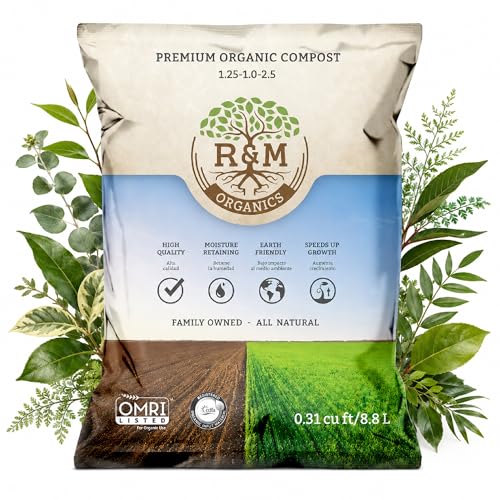
5. R&M Organics Premium Organic Compost 10 lb Bag
A small bag that packs a rescue punch for struggling plants.
This 10-pound bag of dairy cow manure compost is the entry-level option that still delivers real results. It is designed for all-purpose use — vegetable gardens, fruit trees, flowers, lawns, and container plants. The low-odor formula makes it comfortable to use indoors or out, and the fine, topsoil-like texture means it spreads and mixes in easily without clumps.
One reviewer shared a standout story: a tomato plant with yellow leaves turned green, and new growth and flower buds appeared within a week of mixing this compost into a 27-gallon planter. Another buyer rescued their azaleas after a roof washing enzyme cleaner left them in trouble — the compost helped bring them back. Unlike the heavier 34-pound Michigan Peat bag, this one is easy to carry and store for small to medium jobs.
One master gardener even recommended it to a family member. The mix ratio is 5:1, meaning a little goes a long way. You apply a thin quarter-inch layer around plants or mix it into the soil for new projects.
What Works
- Proven to revive struggling plants quickly, as noted by multiple reviewers
- Low-odor, fine texture that is easy to work with and store
- Versatile for both indoor and outdoor use
The Limitation
- Small bag size (10 pounds) means it is not economical for large garden beds
- More expensive per pound than bulk options like Baccto Wholly Cow
Best for: Small gardens, container plants, or giving a specific plant a second chance. Its manageable size is perfect for apartment balconies.
pass on it if: You need to cover a large area — the cost per pound is higher than bigger bags, and you will need multiple units.
Understanding the Specs
Bag Volume and Weight
The volume (measured in quarts, cubic feet, or gallons) tells you how much area you can cover. A 40-quart bag like the Baccto Wholly Cow handles large beds easily. Weight matters for carrying it from the store to your yard — a 34-pound bag is a workout, while a 10-pound bag is easy to haul. Always match the size to your project scope.
Source Ingredients
Compost comes from different sources: cow manure is a classic nitrogen-rich choice, while blends with lobster and crab meal add trace minerals. Peat-based mixes help with moisture retention. The source determines how the compost feeds your soil and plants. Pure manure is predictable, while blends offer a wider range of nutrients.
FAQ
How much compost do I need for my yard project?
Is cow manure compost safe for vegetable gardens?
What does OMRI certified mean?
Can I use compost for indoor potted plants?
How do I apply compost to my lawn?
What is the difference between compost and fertilizer?
Does compost expire or go bad?
Can I use compost as a potting mix by itself?
Why does some compost have a strong smell?
Which compost is best for roses and flowers?
Final Thoughts: The Verdict
For most buyers, the compost for yard winner is the Michigan Peat Baccto Wholly Cow because it offers the best combination of volume, nutrient quality, and odor-free usability for large projects. If you want premium organic certification for your container garden, grab the Blue Ribbon Organics OMRI Compost. And for a simple, pure compost that is gentle on delicate seedlings and indoor plants, the Brut Cow Compost gets the job done without the extras.
How We Picked
We do not accept paid placement. Every pick is matched to a real buyer and a real use-case; we do not hands-on test units.
Sources & Methodology
Specifications: manufacturer listings and product documentation. Review insights: verified customer reviews, as of July 2026. Pricing: not shown on this page (it changes often); check the current price via the retailer link.
As an Amazon Associate, Lawn Gear Lab earns from qualifying purchases. This does not affect which products we feature.