
Specs are compiled from manufacturer listings and verified buyer reviews and can change over time — please confirm the key details on the product page before buying.
If you have ever lost a Monstera or Alocasia to yellowing leaves and mushy stems, you already know the culprit: soil that clings to water instead of letting roots breathe. A chunky soil mix fixes that by trading dense dirt for bark, pumice, and coco coir — a loose, airy structure that drains fast and keeps oxygen flowing to the roots, so your indoor plants actually thrive instead of just surviving.
I’m Rikta — the founder and writer behind Lawn Gear Lab. This guide is built by comparing the manufacturers’ published specifications and the patterns across verified customer reviews, so you get each pick’s real strengths and trade-offs instead of marketing spin.
After digging through the specs and hundreds of real buyer experiences across six popular bagged blends, this guide breaks down what the different ingredients actually do and which chunky soil mix fits your specific plant collection without guesswork.
Our Picks at a Glance
How To Choose The Best Chunky Soil Mix
The whole point of a chunky mix is to stop your plant from sitting in water. But not every bag does that the same way. Here is what separates a good mix from a mushy one.
Drainage Ingredients — What Makes It Chunky
The chunk comes from physical pieces that create air pockets: orchid bark (Douglas fir bark fines), pumice, lava rock, LECA (lightweight expanded clay aggregates — small fired clay balls), and coco husk chips. More chunk means faster water flow and more oxygen at the root level. A mix built mostly of fine coco coir or peat can still hold too much moisture even if the bag says “chunky.”
Volume vs. Your Pot Size
One quart of mix fills roughly one 4-inch nursery pot. A 2-quart bag works for 2-3 small plants or one 6-inch pot. A 1-gallon bag (4 quarts) handles several repots. If you have a collection of large Monsteras, buying a 6-quart option saves you from running out mid-project.
Quick Comparison
| Model | Best For | Volume | Key Drainage Additives | Peat-Free | Amazon |
|---|---|---|---|---|---|
| Craft Aroid Potting Mix★ Best Overall | Budget Starter | 2 Quarts | Douglas fir bark, lava rock, pumice, tree fern fiber | Yes | Amazon |
| Rosy Soil Aroid Soil MixAlso Great | Best Overall | 4 Quarts | Pine bark, pumice, biochar | Yes | Amazon |
| Sol Soils Houseplant Chunky Mix | Premium Drainage | 1 Gallon | Coco husk, perlite, pumice, LECA, pine bark | Yes | Amazon |
| Forbidden Cereal Aroid Potting Mix | Largest Volume | 7.1 Liters (~7.5 Quarts) | Douglas fir bark, perlite, LECA, charcoal, coco chips | Yes | Amazon |
| Premium AROID Soil Blend | Biochar & Mycorrhizae | 4 Quarts | Orchid bark, coco husk, pumice, biochar | Yes | Amazon |
| Noot Potting Soil Mix | Pre-Soaked & Ready | 1 Gallon | Coconut chips, coarse perlite | No (low coco coir) | Amazon |
In‑Depth Reviews
1. Craft Aroid Potting Mix
Our pick — over 4.5★ from 950+ verified ratings; the strongest balance of quality and price.
A small-bag entry point with Douglas fir bark, lava rock, and New Zealand tree fern fiber at a lower cost.
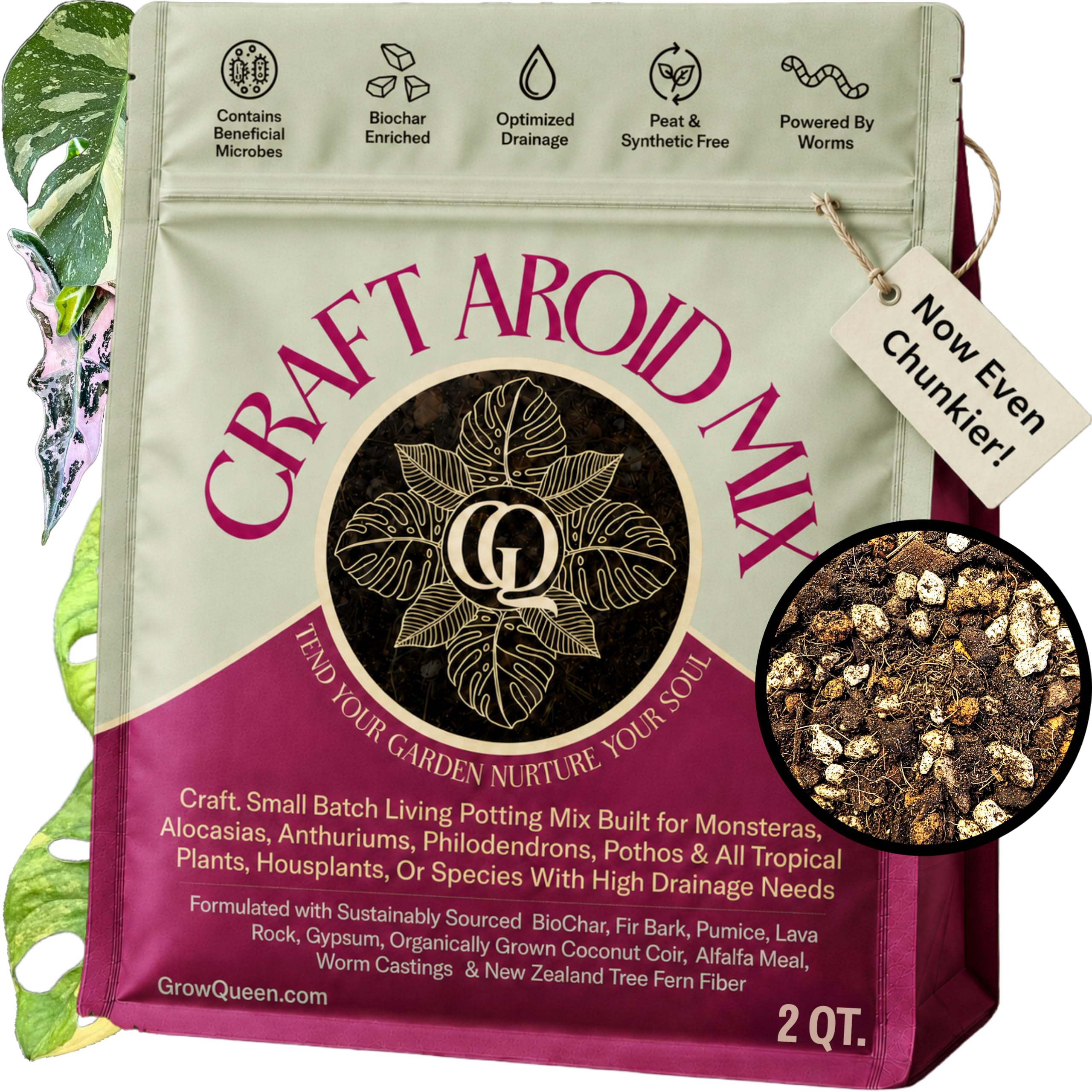
This 2-quart mix from Grow Queen is the most affordable option here and the smallest bag. It uses Douglas fir bark fines, lava rock, pumice, and New Zealand tree fern fiber (a mineral that helps neutralize soil pH to around 6.0, mimicking the natural pH of tropical forest floors). Certified organic coco coir replaces peat, and the brand claims it is washed more times than competitors to remove salts. Buyers give it a 4.6 rating from 997 reviews, and many call it a high-quality, consistent blend that works well for pothos, philodendrons, and other small aroids. One buyer mentioned it is a “forever soil” after using it for months without seeing bugs, mold, or mildew.
The trade-off is important: a verified buyer review explicitly warns that this mix caused root rot in larger plants (Alocasia, Philodendron) over two months due to excessive moisture retention. For small aroids in 6-inch pots or smaller, it works great — but if you are potting up a large Monstera or Alocasia, the Rosy or Forbidden Cereal blends will handle the extra water better. The 2-quart volume is 2 quarts, while the Rosy and Premium AROID bags are 4 quarts.
What it does well
- Tree fern fiber helps buffer pH — unique among these six blends
- High buyer satisfaction for small-plant use
- Lower price makes it an easy test bag for new aroid owners
Reality check
- Retains too much moisture for larger aroids — risk of root rot at scale
- 2-quart bag runs out fast if you have more than two plants to repot
Great starting point if you own smaller aroids in 6-inch pots or less and want an affordable organic blend — but steer clear if you are potting up large-leaved plants that demand extra drainage.
2. Rosy Soil Aroid Soil Mix
A living, breathing mix that feeds roots while staying airy and fast-draining.
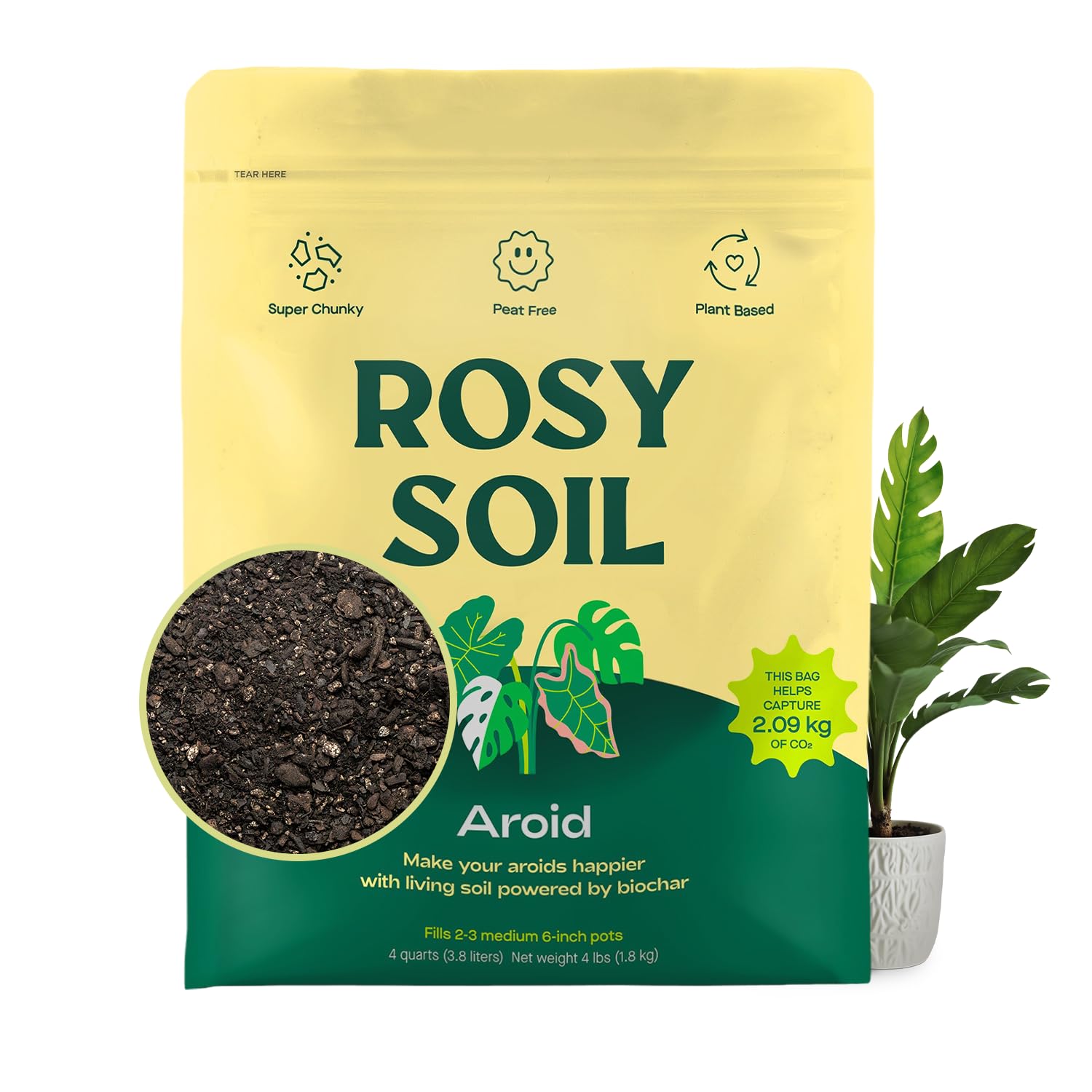
The defining ingredient here is biochar — a lightweight, porous charcoal that helps store carbon and acts as a long-term home for beneficial microbes. Combined with pine bark fines and pumice, this 4-quart blend gives roots the chunky structure they crave without compaction over time. Buyers report switching from Ocean Forest and seeing new growth within two weeks, plus no gnats after the swap. At 2.08 kilograms per bag, it fills 2-3 medium 6-inch pots, making it a strong mid-volume option that does not force you to buy another bag mid-project.
Unlike the Craft Aroid Mix, which holds 2 quarts and caused moisture issues in larger plants, the Rosy blend holds 4 quarts versus the Craft Aroid Mix’s 2 quarts — and its biochar-additive keeps the texture consistent even with heavy watering. Reviewers also note the resealable bag keeps unused mix fresh, though one reviewer noted the seal can be tricky to close fully.
What makes it work
- Microbially active — includes worm castings, mycorrhizae, and compost for natural feeding
- Chunky but not massive — roots anchor easily without big gaps
- Carbon-negative design using biochar instead of peat
Noted by buyers
- Resealable bag does not close easily after first use
- Premium price for the volume compared to standard potting soil
Best for plant parents who want a low-maintenance, long‑lasting home for their Monsteras and Philodendrons — and prefer a peat‑free option with real microbial life.
3. Sol Soils Houseplant Chunky Mix
A five‑ingredient powerhouse that brings five different drainage textures to the party.
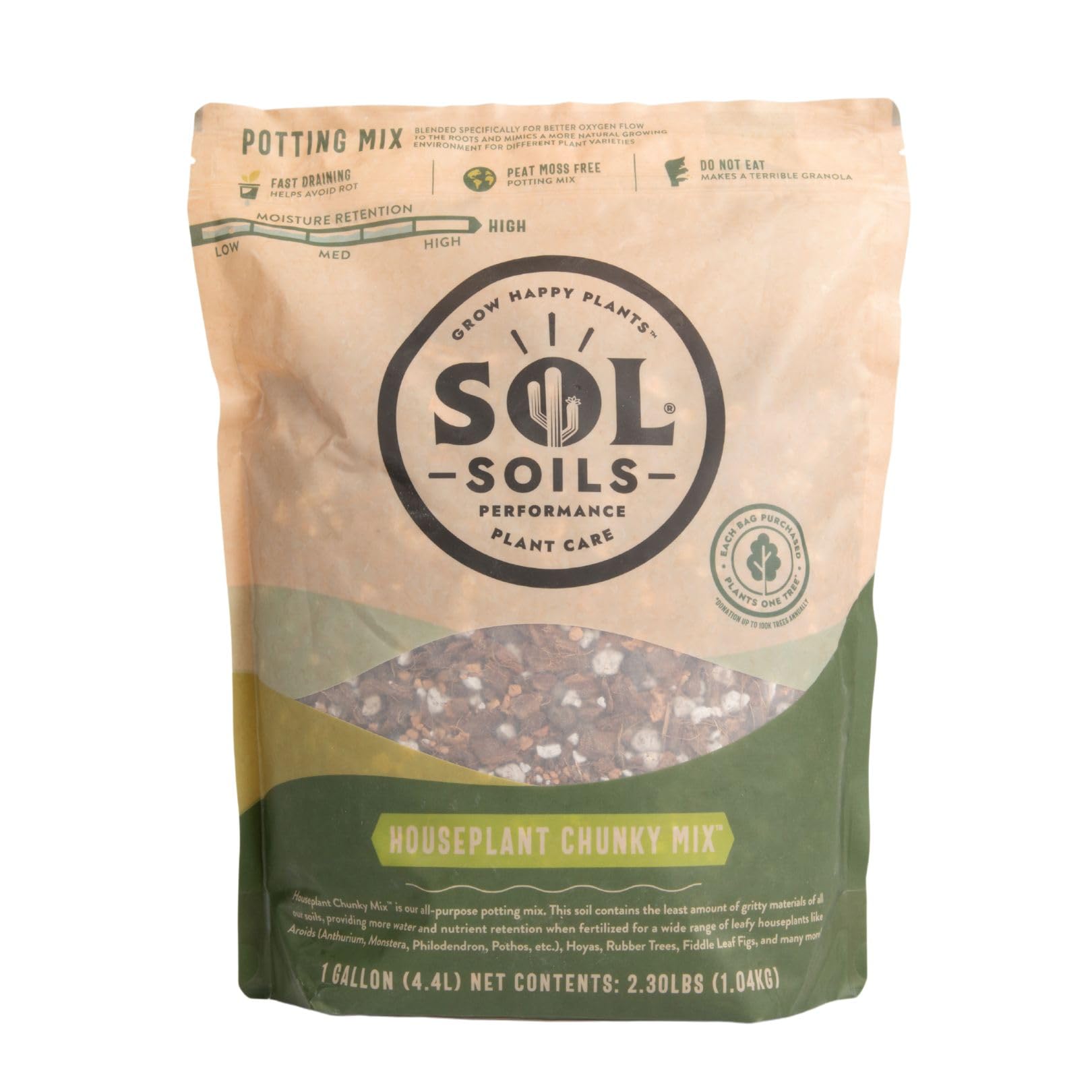
This 1-gallon bag mixes coconut coir, husk chips, perlite, pumice, pine bark, and LECA — lightweight expanded clay aggregates — into a blend that is dry out of the bag and spectacularly airy. Owners mention it arrives dry (no pre-moistening), so you can control the initial moisture. One reviewer wrote that a Thai Constellation Monstera, Hoya recovering from root rot, and pothos all improved after repotting. The downside is the same buyers mention: the bag is small relative to the premium price, and there is no larger size available if you have a big collection. Still, for owners of expensive aroids who cannot risk compaction or root rot, this mix earns its cost by eliminating guesswork.
Compared to the Rosy Soil mix, Sol Soils leans even further into chunkiness with LECA balls (lightweight expanded clay aggregate — small clay pebbles that create air pockets) and bark, and it holds 1 gallon (4 quarts) — the same volume as Rosy, but with a wider variety of aeration textures. A portion of each bag also goes toward global reforestation.
what separates it
- Five drainage components prevent any single texture from dominating
- Arrives dry — no pre-moistened bags that can hide mold or gnats
- Supports reforestation projects per bag sold
Watch out for
- No larger bag size currently offered — you will buy multiple 1-gallon bags for big collections
- Cost is higher per quart than most blends
Reach for this if you keep rare or finicky aroids and you are tired of mixes that arrive pre-moistened and suspect — the dry, airy texture is a real time-saver.
4. Forbidden Cereal Aroid Potting Mix
The biggest bag on the list, packed with eight organic ingredients and a clever separated moss topper.
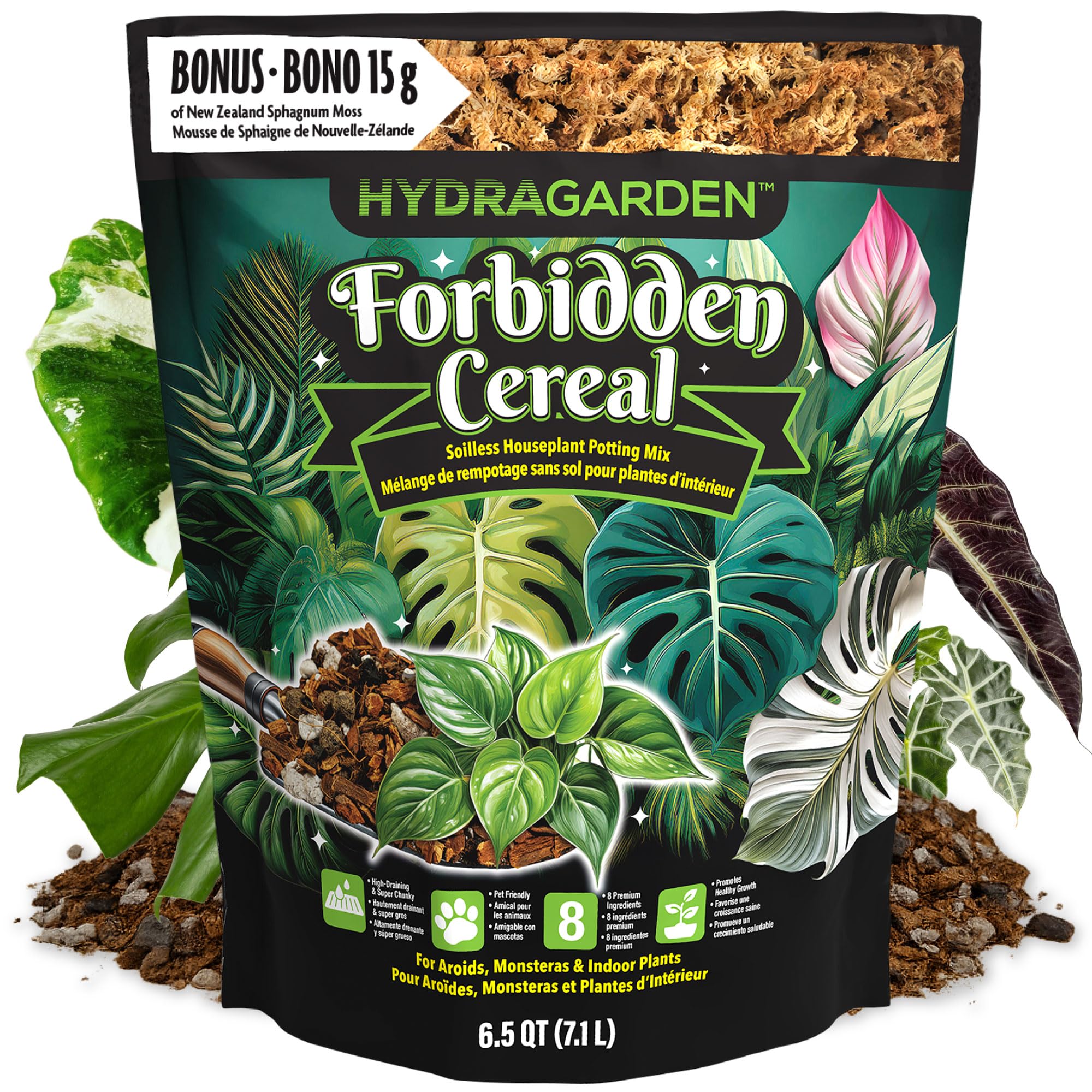
At 7.1 liters (roughly 7.5 quarts), this is the highest-volume mix here — at 7.5 quarts, compared to the 4-quart bags from Rosy and Sol Soils. It is built with hand-sorted Douglas fir bark, fine and coarse perlite, triple-washed coco coir, coconut fiber, coco chips, horticultural charcoal (biochar), worm castings, LECA balls, and New Zealand sphagnum moss. The moss comes bagged separately and layered on top, so you decide whether to use it as a moisture-retaining top-dressing or mix it into the root zone. One 6-month update from a buyer reports a Monstera that tripled in size with thick healthy roots. Multiple reviewers mention the chunkiness looks exactly like a bowl of cereal — hence the name — and that water flows straight through without pooling. The trade-off is the price: it is the most expensive bag here, though the larger volume brings the per-quart cost closer to mid-range options.
Unlike the Craft Aroid Mix’s 2-quarts, which left some buyers wanting more for large plants, Forbidden Cereal has enough volume to repot several Monsteras at once without restocking.
Why it stands out
- Largest volume in the lineup — covers multiple repots in one buy
- Separate sphagnum layer gives you customization that no other bag offers
- 8 organic ingredients cover every texture aroid roots need
Considerations
- Premium sticker price even compared to other high-end blends
- Moss layer adds a step if you prefer a simple open-and-use mix
If you have a large collection of Monsteras, Hoyas, and Alocasias and want a single bag that lasts through several repots, this is the volume-to-quality champion — as long as the cost fits your budget.
5. Premium AROID Soil Blend
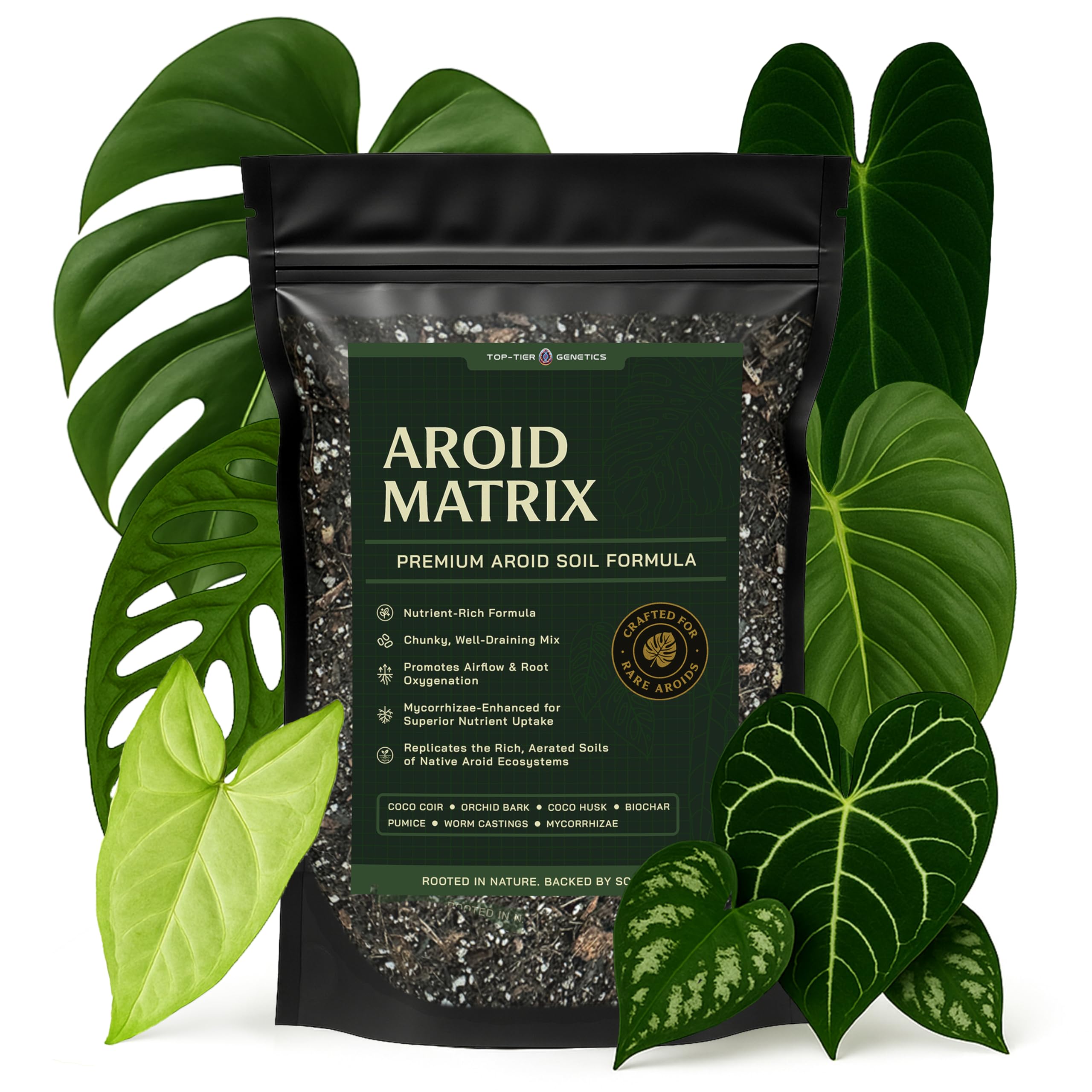
A high-nutrient 4-quart blend that adds biochar and mycorrhizae for a root-boosting head start.
This mix from Top Tier Genetics combines orchid bark, coco husk, pumice, biochar, coco coir, and worm castings, plus added mycorrhizae — beneficial fungi that form a symbiotic relationship with plant roots to improve nutrient and water uptake. Buyers give it a 4.7 rating across 243 reviews and note that plants perked up within days of repotting. One reviewer called it “the good stuff” and said it is pricey but worth it for expensive plants. At 4 quarts, it matches the volume of the Rosy blend, but the addition of mycorrhizae gives it an edge if you are trying to revive a stressed plant or encourage faster root development. It is also ready to use out of the bag — no mixing or pre-soaking required.
Compared to the Noot mix (which is pre-soaked with organic nutrients and contains 16 bacterial strains), the Premium AROID Blend focuses more on physical aeration and fungal support rather than microbial diversity.
Strengths
- Mycorrhizae and biochar support long-term soil health
- Consistent batch-to-batch quality reported by repeat buyers
- 4 quarts at a mid-range price point
Noted by reviewers
- Some buyers find it pricey relative to the bag size
- No larger volume option available yet
Solid pick if you want a mycorrhizae-boosted mix that gives your aroids a root-fungal head start — especially for rehabbing plants or pushing new growth seasonally.
6. Noot Potting Soil Mix
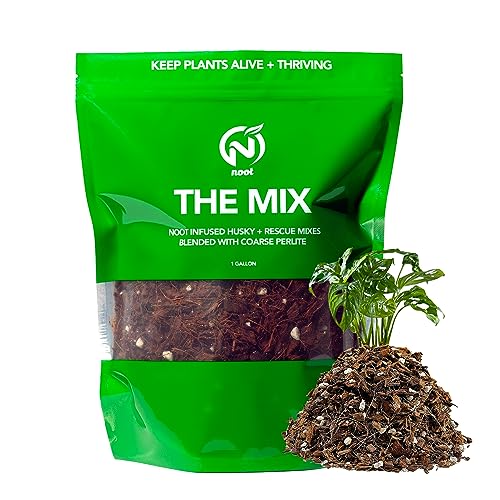
A pre-soaked, microbe-rich blend that arrives moist and ready to use — no mixing, no dust.
Noot Mix takes a different approach: instead of a dry bag, it arrives pre-soaked with organic nutrients (NPK 0.10-0.15-0.12) and 16 strains of beneficial bacteria and fungi. The mix uses larger coconut chips and fibers with coarse perlite for drainage, aiming for a texture that is airy but still holds enough moisture between waterings. Customers note successfully transplanting dragon trees, snake plants, pothos, anthurium, and African violets into Noot, with one reviewer noting it eliminated a fungus gnat problem. The 1-gallon bag is hand-packed and resealable. However, several reviewers point out the bag is small for the price and one discovered gnats emerging from the moist mix. Because it arrives pre-moistened, you lose the ability to control initial moisture — something the dry Sol Soils bag leaves in your hands.
The Noot blend holds 1 gallon (4 quarts), the same as Sol Soils and Rosy, making it a direct volume competitor; the key difference is that Noot comes pre-fed and pre-wetted, while Sol offers a dry, fully customizable base.
Unique advantages
- Pre-soaked with organic nutrients — skip the fertilizer for the first few weeks
- 16 strains of beneficial bacteria and fungi already active in the bag
- Fast-draining design from a rare plant seller who understands aroid needs
Buyer caveats
- Pre-moistened mix can sometimes harbor fungus gnats
- Bag is small for the cost, according to multiple reviews
Best for the impatient repotter who wants a pre-fed, pre-moistened mix that works right out of the bag — just be sure to inspect the bag before opening and use it quickly to avoid moisture-related issues.
Understanding the Specs
Coco Coir vs. Peat Moss
Coco coir is a renewable byproduct of coconut processing — it holds water well but still allows air to move through, unlike peat moss which compacts and traps moisture near the roots. Most chunky mixes use coir as the base and add larger bark or pumice pieces to break up the texture. Peat-free mixes (like Rosy, Forbidden Cereal, and Premium AROID) avoid the environmental cost of harvesting peat bogs and usually drain faster.
Biochar and Mycorrhizae
Biochar is a form of charcoal that stays in the soil for years, acting as a sponge for nutrients and a home for microbes. Mycorrhizae are beneficial fungi that attach to roots and help them absorb water and minerals. Together they turn a simple potting mix into a living ecosystem that feeds the plant over many months. You find biochar in Rosy Soil, Premium AROID, and Forbidden Cereal — three of the highest-rated blends here.
FAQ
What size bag do I need for a Monstera in a 10-inch pot?
Will a chunky soil mix work for succulents and cacti?
Can I reuse old chunky soil mix from a previous pot?
Why is my chunky soil mix still holding water at the bottom of the pot?
Is peat-free always better for indoor plants?
How do I know if my mix has too much bark versus too much coir?
Does a chunky mix dry out faster than regular potting soil?
What is LECA and why is it in some chunky mixes?
Can I use a chunky aroid mix for my Orchid?
Do I need to add fertilizer to a chunky mix?
Final Thoughts: The Verdict
For most plant owners, the best chunky soil mix winner is the Rosy Soil Aroid Soil Mix because it balances biochar-enhanced microbial life, a chunky structure that drains fast, and a 4-quart volume that covers two to three medium pots without requiring a second bag. If you want the largest single bag for a big collection, grab the Forbidden Cereal Aroid Potting Mix. And for those who prefer a bone-dry, fully customizable base with the highest degree of drainage control, the Sol Soils Houseplant Chunky Mix is your best bet.
How We Picked
We do not accept paid placement. Every pick is matched to a real buyer and a real use-case; we do not hands-on test units.
Sources & Methodology
Specifications: manufacturer listings and product documentation. Review insights: verified customer reviews, as of July 2026. Pricing: not shown on this page (it changes often); check the current price via the retailer link.
As an Amazon Associate, Lawn Gear Lab earns from qualifying purchases. This does not affect which products we feature.